
BLOG

- Home
- Blog
- Plastic Polymer Composite Article
- Applications of CaCO₃ Stone Powder in PVC Pipe Production
Applications of CaCO₃ Stone Powder in PVC Pipe Production
October 07,2026
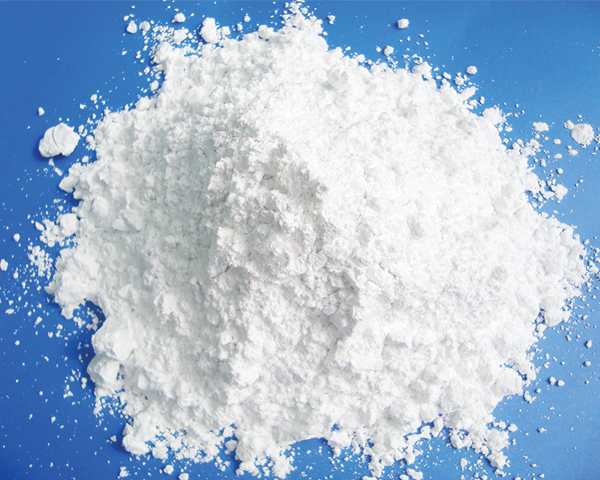
CaCO₃ stone powder is an essential raw material in PVC pipe production, helping to improve hardness, durability, processability, and optimize production costs. Thanks to its outstanding properties, stone powder is widely used in many types of PVC pipes for construction, water supply and drainage, and industrial applications.
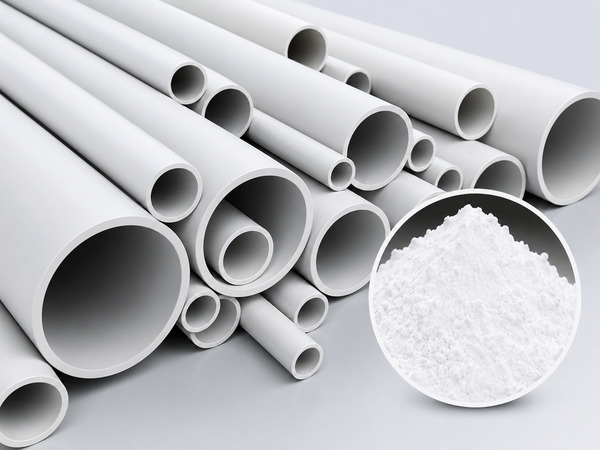
Applications of CaCO₃ Stone Powder in PVC Pipe Production
The Role of CaCO₃ Stone Powder in PVC Pipe Production
CaCO₃ (calcium carbonate) stone powder is not simply a filler used to reduce costs; it also serves as a functional additive that determines the structure and mechanical properties of PVC pipes.
Reducing Raw Material Costs
Virgin PVC resin is expensive and its price fluctuates sharply in line with global oil prices. CaCO₃ stone powder is naturally abundant and considerably cheaper than virgin resin. Replacing part of the plastic volume with CaCO₃ directly lowers the cost of the finished product and enhances a company's competitiveness in the market.
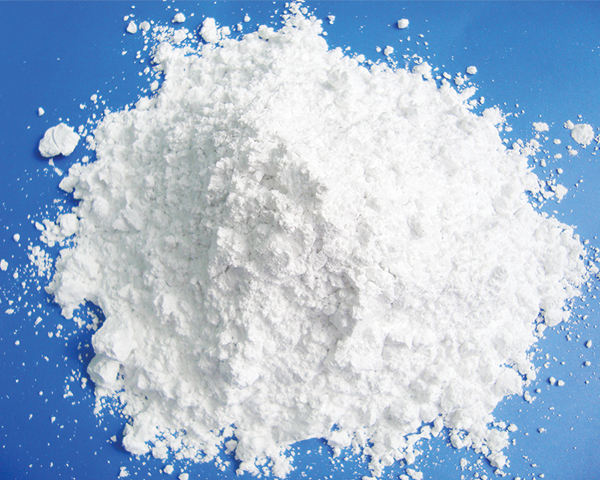
CaCO₃ stone powder is low-cost, helping businesses reduce the cost of finished products
Increasing Hardness and Dimensional Stability
CaCO₃ stone powder has high natural hardness. When evenly dispersed throughout the PVC resin matrix, CaCO₃ particles act as reinforcing points that increase the elastic modulus and ring stiffness of the pipe. In addition, CaCO₃ has a lower coefficient of thermal expansion than plastic, helping the finished pipe retain its original structural shape without warping or deforming under external force or environmental conditions.
Improving Processability
During pipe extrusion, CaCO₃ stone powder acts as an internal heat-transfer aid. Its thermal conductivity is better than that of PVC resin, allowing the molten plastic mass to melt faster and more evenly while reducing localized overheating. CaCO₃ particles with an appropriate fineness also help increase flow pressure inside the extrusion barrel, giving the pipe surface a smoother, more even finish.
Helping Control Shrinkage
After hot processing and sudden cooling with water, PVC resin tends to shrink significantly in volume, which can easily cause dimensional deviation or cracking. CaCO₃ particles act as a structural framework, occupying space within the material to resist the shrinkage of PVC polymer chains. As a result, the pipe's shrinkage rate is kept strictly within the permitted standard limits.
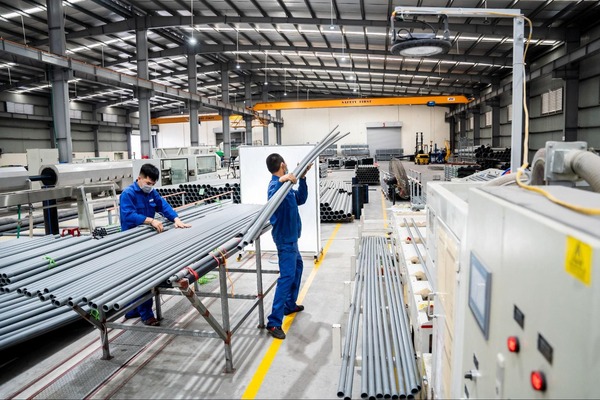
CaCO₃ stone powder helps reduce shrinkage in PVC plastic products
Boosting Production Output
Thanks to the optimal heat transfer and heat dissipation provided by stone powder, the cooling time for shaped pipes after leaving the extrusion die is significantly shortened. Production cycles run faster, allowing businesses to increase hourly pipe extrusion output without compromising product quality, thereby optimizing the operating capacity of the production line.
Applications of CaCO₃ Stone Powder in PVC Pipe Production
Depending on the intended use and the technical requirements of each pipe type, CaCO₃ stone powder is applied according to very different standards.
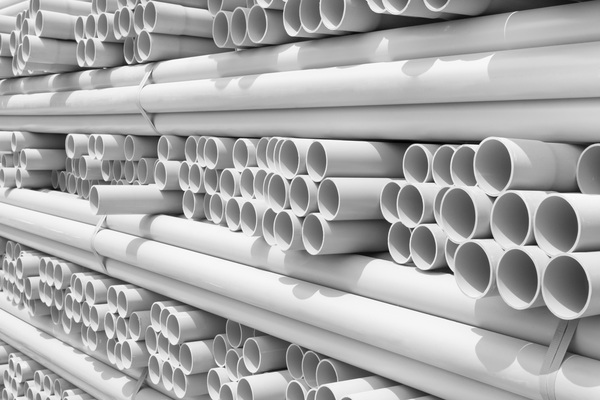
Applications of CaCO₃ stone powder in PVC pipe production
PVC Water Supply Pipes
Water supply pipes require high mechanical strength, the ability to withstand significant internal water pressure, and strict hygiene and safety standards.
- Requirement: Ultra-fine, high-purity stone powder (CaCO₃ content > 98%) must be used to avoid impurities that could affect tensile strength and water quality.
- Characteristics: A lower blending ratio is used to maintain the pipe's flexibility and its ability to withstand high hydrostatic pressure.
PVC Drainage Pipes
Drainage pipes generally experience less internal pressure than water supply pipes but require excellent ring stiffness to withstand compressive loads from surrounding soil and traffic when buried underground.
- Requirement: Stone powder with more flexible particle sizes can be used (either stearic acid-coated grade or standard grade).
- Characteristics: The proportion of CaCO₃ used in drainage pipes is typically higher than in water supply pipes, aimed at optimizing surface hardness and minimizing material costs as much as possible.
PVC Electrical Conduit Pipes
Electrical conduit pipes (including rigid round conduits and flexible corrugated conduits) require excellent insulation, flame resistance, impact resistance, and especially flexibility for easy bending during installation of mechanical and electrical (M&E) systems.
- Requirement: Selectively chosen ultra-fine stone powder must be used, with excellent dispersion required to avoid creating defect points that could cause cracking when the pipe is bent.
- Characteristics: The blending content is carefully calculated to balance the pipe's compressive strength within walls with the flexibility needed when bending around corners.
How Does the CaCO₃ Stone Powder Content Affect PVC Pipes?
The content of CaCO₃ stone powder in the formulation is a decisive factor in the quality of PVC pipes. Using the wrong content leads directly to technical consequences:
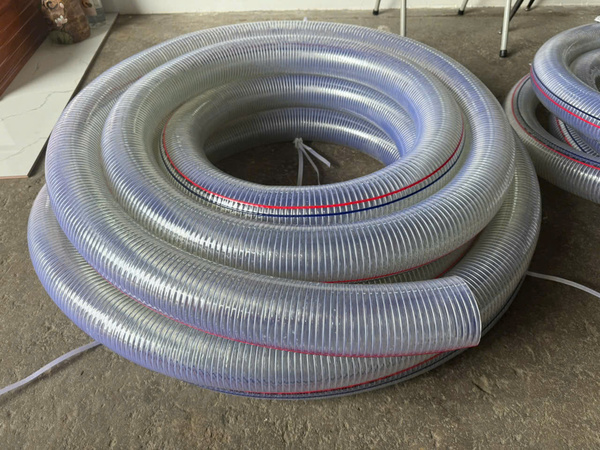
CaCO₃ stone powder content directly affects the quality of PVC resin
When the CaCO₃ content is optimal (meets standards):
- The pipe achieves a perfect balance: it meets standards for ring stiffness, impact resistance, and a smooth, glossy surface.
- Production costs are reduced to the lowest possible level without shortening the service life of the structure.
When the CaCO₃ content is too low:
- The pipe becomes too soft and easily dents or deforms under external force or environmental impact.
- Production costs rise due to wasted virgin PVC resin, reducing the factory's profit margin.
When the CaCO₃ content is too high (excessive use of plastic filler):
- The resin mass becomes "over-mineralized," and the bonds between PVC polymer chains break and become discontinuous.
- The finished pipe becomes brittle, prone to cracking or shattering even under light impact or when bent.
- The pipe surface becomes rough and dull, and rapidly wears down the extruder's screw and barrel.
APEX Provides Optimal Raw Material Solutions for PVC Pipe Production
As a leading, trusted supplier of industrial raw materials, APEX offers a comprehensive range of CaCO₃ stone powder solutions, helping PVC pipe manufacturers solve two problems at once: technical quality and cost optimization.
- Diverse, high-quality products: APEX supplies a full range of CaCO₃ stone powder, from uncoated ultra-fine powder to premium stearic acid-coated powder. The products offer superior whiteness (>95%) and a pure CaCO₃ content of over 98.5%.
- Advanced particle separation technology: A modern production line strictly controls particle size (D50, D97), ensuring absolute uniformity in fineness. As a result, APEX stone powder disperses easily into the PVC resin matrix, prevents clumping, and maximizes the service life of extrusion machinery.
- In-depth technical consulting: Beyond simply selling products, APEX's team of experts is ready to work alongside manufacturers to advise on and test formulations, finding the optimal blending ratio for each type of pipe (water supply, drainage, electrical conduit).
- Stable supply and competitive costs: With large production capacity and a professional logistics chain, APEX is committed to providing a long-term, stable supply at the most competitive prices in the market, giving businesses peace of mind in their production.
If your business is looking for high-quality CaCO₃ stone powder for PVC pipe production, backed by a stable supply, suitable technical specifications, and cost-optimized solutions, contact APEX now via hotline +84 274 362 0911 for consultation.