
BLOG

- Home
- Blog
- Plastic Polymer Composite Article
- Mistakes When Choosing CaCO3 Filler Masterbatch to Avoid
Mistakes When Choosing CaCO3 Filler Masterbatch to Avoid
October 07,2026
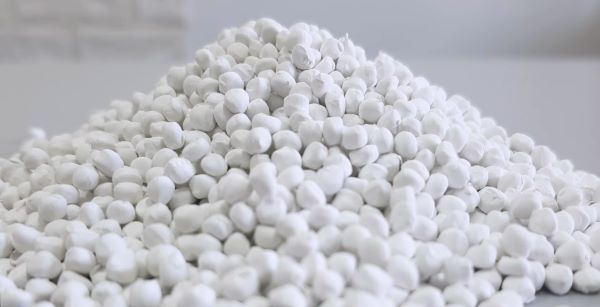
Choosing the wrong CaCO₃ Filler Masterbatch can affect plastic product quality, processing performance, and production costs. Many businesses make mistakes when evaluating CaCO₃ content, particle size, dispersion, or additive quality. Let's look at the common mistakes when choosing CaCO3 Filler Masterbatch so you can select raw materials more effectively.
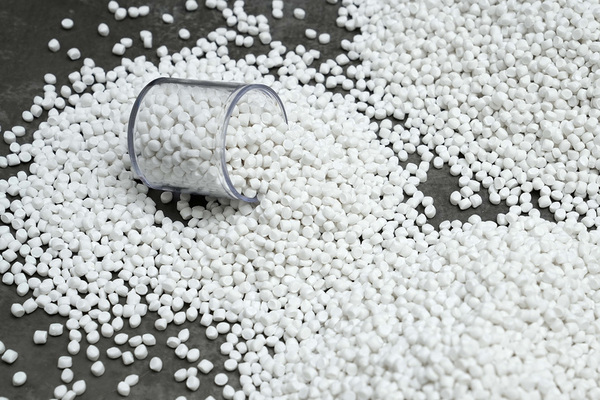
Mistakes when choosing CaCO3 filler masterbatch to avoid
How Does CaCO₃ Filler Masterbatch Affect Product Quality?
Plastic filler masterbatch is made up of three main components: calcium carbonate powder, carrier resin, and dispersing additives. When chosen correctly, filler masterbatch delivers several outstanding benefits:
- Cost optimization: It replaces part of the expensive virgin resin with lower-cost calcium carbonate powder.
- Structural shaping: It increases hardness and reduces shrinkage of the finished product after it leaves the extrusion or injection mold.
- Improved mechanical properties: It supports better heat conduction, shortening the machine's cooling cycle and boosting processing output.
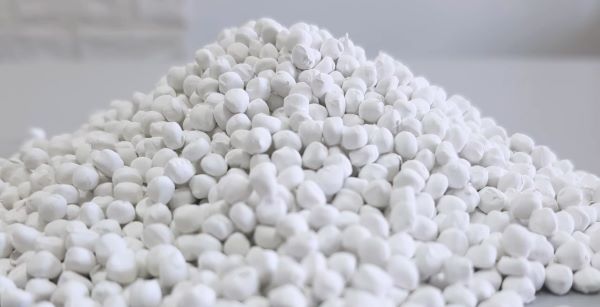
CaCO3 filler masterbatch helps increase hardness and reduce shrinkage in finished products
On the other hand, choosing the wrong type of filler masterbatch can break down the polymer chain structure of the resin. Inconsistency between the filler and the carrier resin creates stress concentration points, making the final product brittle and prone to cracking under tension or impact. For thin films, using the wrong filler reduces transparency, causes surface roughness, and leads to repeated tearing on the production line.
7 Common Mistakes When Choosing CaCO3 Filler Masterbatch
Below are 7 common mistakes when choosing CaCO₃ Filler Masterbatch that businesses often make during material selection and use:
Prioritizing low price over quality
This is the most common mistake among plastic manufacturers. To achieve the lowest possible price, many small manufacturing facilities use recycled resin contaminated with impurities, or use raw calcium carbonate powder that has not been surface-treated with fatty acids (such as stearic acid).
Consequence: Low-cost filler has extremely poor dispersion. When blended, it distributes unevenly throughout the resin, creating clumps of calcium carbonate powder that reduce the product's aesthetics and completely destroy the mechanical properties of the finished item.
Not checking the technical specifications of the filler masterbatch
Every plastic application requires its own specific set of filler technical parameters, including calcium carbonate fineness, melt flow index (MFI), and moisture content.
Consequence: If a business is blowing film but purchases filler with a calcium carbonate particle size that's too large (exceeding 5 microns), these particles will clog the extruder's filter screen, increase barrel pressure, and cause continuous film breakage. In addition, if the filler's MFI is too low compared to the carrier resin, the mixture won't blend evenly, resulting in surface defects such as an orange-peel texture.
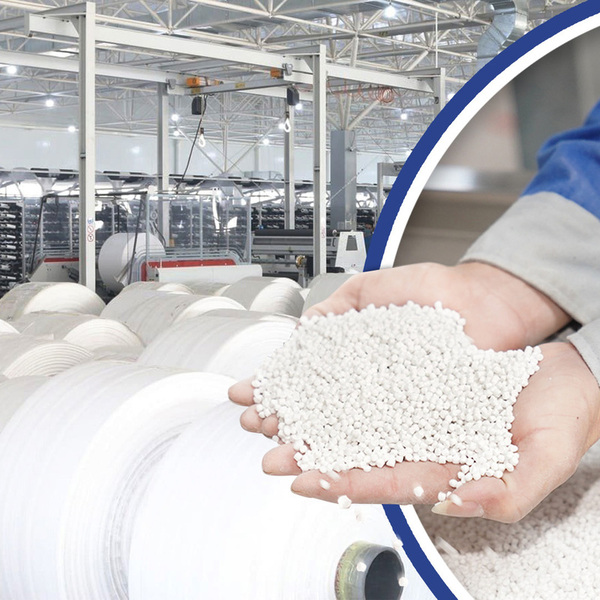
Choosing the wrong filler parameters can clog machinery and cause surface defects
Choosing a filler masterbatch that's incompatible with the carrier resin and application
A core principle in the plastics industry is that the carrier resin of the filler masterbatch must be compatible with the base resin of the product. For example, if your product is made from polypropylene (PP), you must use filler with a PP carrier resin.
Consequence: Many businesses, out of carelessness or lack of knowledge, use PE-based filler for PP injection molding. Because these two resins have different melting points and molecular structures, they cannot bond homogeneously. As a result, the molded product delaminates on the surface, becomes brittle, and warps when exposed to ambient temperature changes.
Not evaluating the optimal blending ratio
Many factory managers tend to push the filler ratio to the maximum level (for example, 40%-50%), hoping to minimize the product's cost as much as possible.
Consequence: Overloading the resin with more calcium carbonate powder than the carrier resin can encapsulate destroys the polymer's flexible bonding properties. The final product becomes extremely brittle, prone to breaking apart even under light force, loses its elongation capacity, and fails to meet export standards.
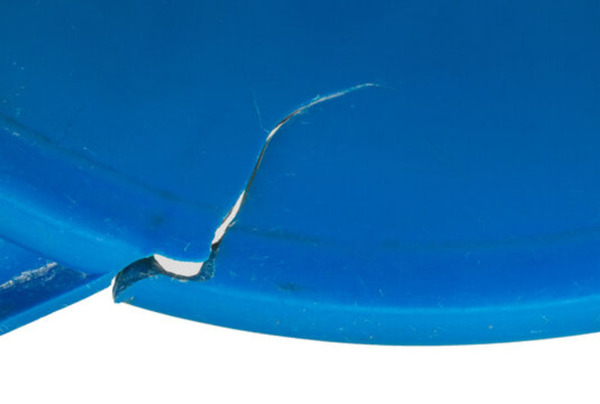
Overloading filler reduces a product's flexibility
Not running a trial on the production line before mass production
Every factory's machinery has a different screw configuration, drying system, and temperature settings. Rushing to place a large order on the first collaboration without a trial run is a major gamble.
Consequence: When put into mass production, the filler may fail to adapt to the screw's rotation speed or the machine's processing temperature, resulting in widespread defects, forcing production to stop for cleaning, and requiring the entire batch of raw material to be discarded.
Overlooking the supplier's technical consulting capability
When purchasing filler masterbatch from purely commercial trading companies, businesses only receive a price quote without any technical support.
Consequence: The plastics industry is constantly evolving and frequently encounters mechanical issues during machine operation. If the supplier doesn't have a team of experienced engineers, they won't be able to advise you on how to adjust processing zone temperatures, how to increase or decrease the blending ratio, or how to resolve issues such as film streaking or air bubbles on the product surface.
Not controlling quality consistency between batches
Quality stability is a matter of survival for every plastics factory. Some unreliable suppliers may deliver an excellent first batch to win trust, but then change the formula in later batches, increasing the ratio of cheap calcium carbonate powder or using lower-quality carrier resin to cut costs.
Consequence: When filler quality becomes inconsistent, your finished plastic products will vary from batch to batch - some brittle, others discolored (turning yellow or gray) - seriously damaging your reputation with the partners who purchase your final products.
Criteria for Choosing the Right CaCO₃ Filler Masterbatch
To fully avoid the technical errors mentioned above, businesses need to establish strict criteria when selecting plastic filler:
|
|
|
|
|
|
|
|
|
|
|
|
|
|
|
|
|
|
APEX Vietnam - CaCO₃ Filler Masterbatch Solutions for Every Application
If your business is looking for a reliable, stable plastic filler manufacturer with deep technical expertise, APEX Vietnam is a trusted partner. The company provides optimal filler solutions thanks to the following competitive advantages:
- Premium raw materials: APEX Vietnam uses calcium carbonate powder with the highest natural whiteness, combined with 100% virgin resin and imported dispersing agents, ensuring the filler disperses completely evenly throughout the resin structure.
- Modern production technology: An advanced twin-screw extrusion line tightly controls processing temperature and completely eliminates moisture and impurities, ensuring the filler is uniform in size and quality.
- Custom formulation to meet demand: APEX Vietnam's engineering team directly surveys the customer's machinery and application (blown film, injection molding, sheet extrusion, PP woven bag weaving) to design a filler formula with the perfect melt flow index and fineness.
- 24/7 technical support: APEX Vietnam supports customers throughout the sample-testing process directly at the production facility, ready to make technical adjustments until the customer is fully satisfied with the finished product.
Contact APEX Vietnam today for expert consultation, competitive pricing, and a free CaCO3 Filler Masterbatch sample for your business!