
NEWS & EVENTS

- Home
- News
- Products Information
- Can filler masterbatch make plastic more biodegradable?
Can filler masterbatch make plastic more biodegradable?
May 19,2026
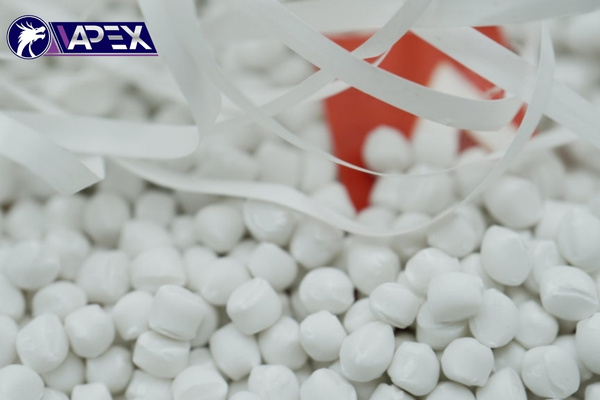
Filler masterbatch helps plastic degrade more easily by weakening polymer chains and creating physical porosity within the material. Join APEX Vietnam in taking a deeper look at can filler masterbatch make plastic more biodegradable, through physicochemical reactions, as well as optimal solutions for green plastic raw materials below.
How does biodegradable plastic break down?
Biodegradable plastic is a type of polymer material that can be completely broken down by microorganisms into natural substances such as CO₂, water, and organic biomass. This degradation process occurs through extracellular enzymes secreted by microorganisms, which attack and cleave the chemical bonds within the polymer chain.
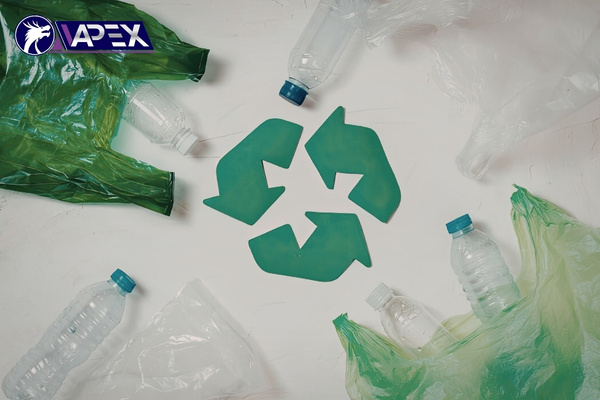
What is biodegradable plastic?
How does the biodegradation process work?
Stage 1 - Fragmentation: Under the influence of heat, moisture, UV light, or enzymes, the polymer structure breaks apart. The molecular weight of the plastic chains gradually decreases, and the material begins to split into smaller microplastic fragments, making it easier for microorganisms to access the surface.
Stage 2 - Biodegradation: Microorganisms use the small polymer fragments as a source of carbon and energy. Degrading enzymes continue to be secreted, breaking chemical bonds and converting the polymer into simpler organic molecules. This is the most critical stage, determining the overall rate and extent of degradation.
Stage 3 - Mineralization: The final products are simple inorganic substances such as CO₂, water (H₂O), mineral salts, and biomass. These substances reintegrate into natural cycles, leaving no harmful residues in the environment.
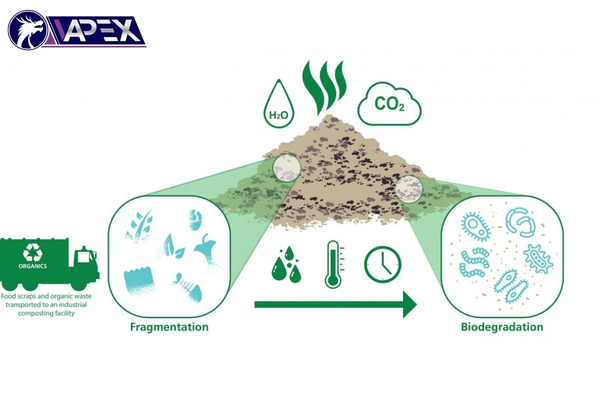
The biodegradation process of plastic occurs in three stages
Key factors that determine degradation rate:
|
|
|
|
|
|
|
|
|
|
|
|
|
|
|
|
|
|
What is CaCO3 and why is it used in plastic?
Pure calcium carbonate plays one of the most important roles as an additive that modifies the mechanical and physical properties of plastic. Manufacturers prioritize this component to strike a balance between cost efficiency and final product quality.
Definition of calcium carbonate (CaCO3)
CaCO3 (calcium carbonate), also known as limestone powder or white powder, is a naturally occurring inorganic compound found in limestone, chalk, and marble. With its pure white color, odorless and tasteless nature, and stable chemical properties, CaCO3 has become one of the most widely used industrial fillers in the world.
In the plastics industry, CaCO3 functions as an inorganic filler, dispersed evenly throughout the polymer matrix to improve many physical and economic properties of the final product.
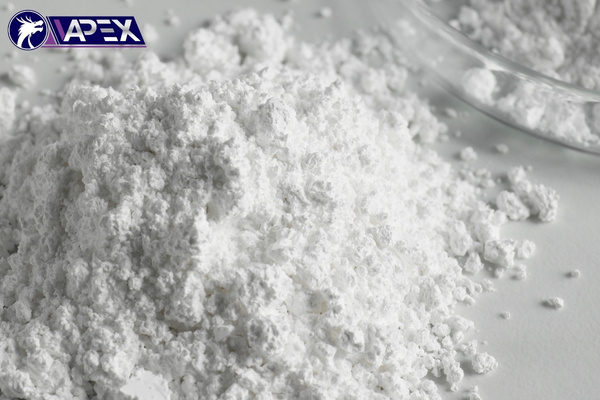
Definition of calcium carbonate (CaCO3)
Why is CaCO3 widely used in plastic manufacturing?
Limestone powder significantly reduces a manufacturer's dependence on virgin petroleum-based resins, which are subject to volatile pricing. Its inclusion delivers outstanding improvements in processing efficiency and product durability.
1. Significant reduction in production costs: CaCO3 is an inexpensive filler compared to virgin resin. By replacing 20-50% of the polymer content with CaCO3 powder, manufacturers can reduce product costs by 15-35% while still maintaining output quality.
2. Improved physical properties of the product:
- Hardness and mechanical strength increase noticeably
- Impact resistance improves through load distribution
- Higher thermal resistance, suitable for demanding working environments
- Reduced shrinkage during processing, helping products achieve more precise dimensions
3. Enhanced whiteness and opacity: CaCO3 has a good refractive index, giving products a naturally bright white color and increased opacity, reducing the need for costly white colorants such as TiO₂.
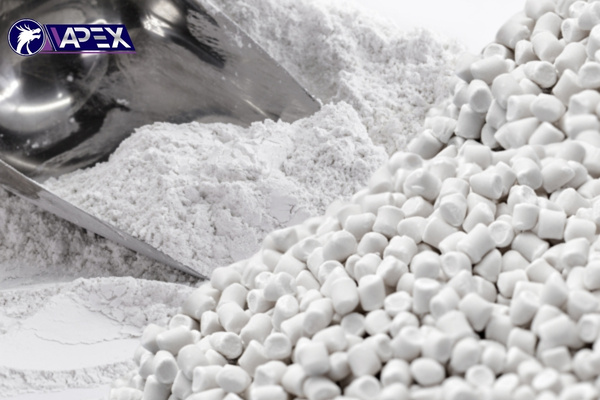
The role of CaCO3 in plastic production
4. Improved processability: Fine CaCO3 powder helps the extrusion and injection molding processes run more smoothly, increasing production line output and reducing defect rates.
5. Better printability: Plastic surfaces containing CaCO3 offer superior ink adhesion, with more stable and longer-lasting print colors - a key advantage in commercial packaging production.
In the plastics industry, CaCO3 is commonly blended with base resins and additives to create filler masterbatch (also known as Taical pellets - an additive used in the plastic product forming process), helping to improve physical properties and reduce product costs. Taical pellets help manufacturers reduce their dependence on virgin resin, while also improving processing efficiency and the dimensional stability of finished plastic products.
Can filler masterbatch make plastic more biodegradable?
Filler masterbatch can indeed help make plastic more biodegradable by disrupting the continuity of durable plastic molecular chains. These structural changes open pathways for degrading agents to penetrate deep into the core of the material.
Mechanisms by which taical pellets affect plastic degradation:
- Polymer structure disruption mechanism: CaCO3 particles act as evenly distributed "weak points" throughout the dense polymer network. They prevent the plastic from forming long, tightly bonded chains, thereby making the material more brittle and more susceptible to breaking down under external environmental forces.
- Positive impact on microbial activity: Calcium carbonate plays a role in regulating the pH of the environment surrounding plastic fragments as the degradation process unfolds. A stable pH stimulates robust growth of bacterial populations, significantly increasing the rate at which plastic is broken down.
- Synergy with bioplastics: Biodegradable plastic formulations achieve optimal performance when manufacturers combine them with an appropriate ratio of limestone powder. This blending creates packaging solutions that are structurally strong yet capable of rapidly "disappearing" once disposed of.
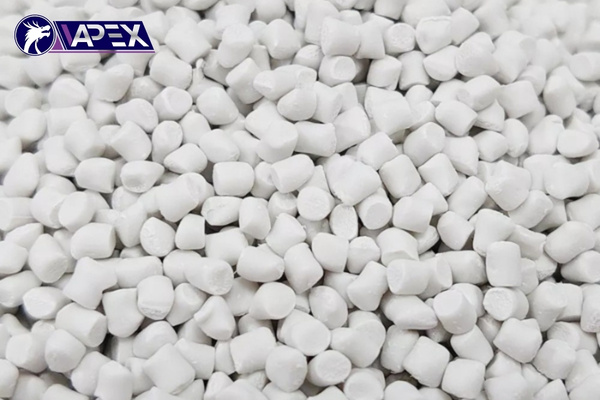
Filler masterbatch helps plastics decompose more easily
APEX Vietnam - Supplier of high-quality taical pellets at competitive prices
The expert team at APEX Vietnam continuously works to deliver additives that meet international standards. We are committed to partnering with our clients on the journey toward sustainable and environmentally friendly manufacturing solutions.
- Strict quality control ensures uniform dispersion throughout the polymer matrix and excellent compatibility with common plastic types.
- APEX Vietnam's engineering team is ready to advise on optimal blending ratios, helping businesses achieve the ideal balance between economic efficiency and environmental sustainability goals.
- On-time delivery is guaranteed for both small and large-scale industrial orders, at pricing that is competitive within the market.
Can filler masterbatch make plastic more biodegradable? Yes, it provides strong support for sustainable environmental protection solutions. Businesses should choose reputable suppliers to ensure that plastic additive pellets meet the highest technical standards. APEX Vietnam offers high-quality Filler Masterbatch solutions to help clients optimize their production processes and elevate their green brand. Contact us today for the most dedicated and professional technical support!