
NEWS & EVENTS

- Home
- News
- Products Information
- Taical Plastic Granules – A Key Raw Material in the Production of Modern Nonwoven Fabrics.
Taical Plastic Granules – A Key Raw Material in the Production of Modern Nonwoven Fabrics.
December 20,2025
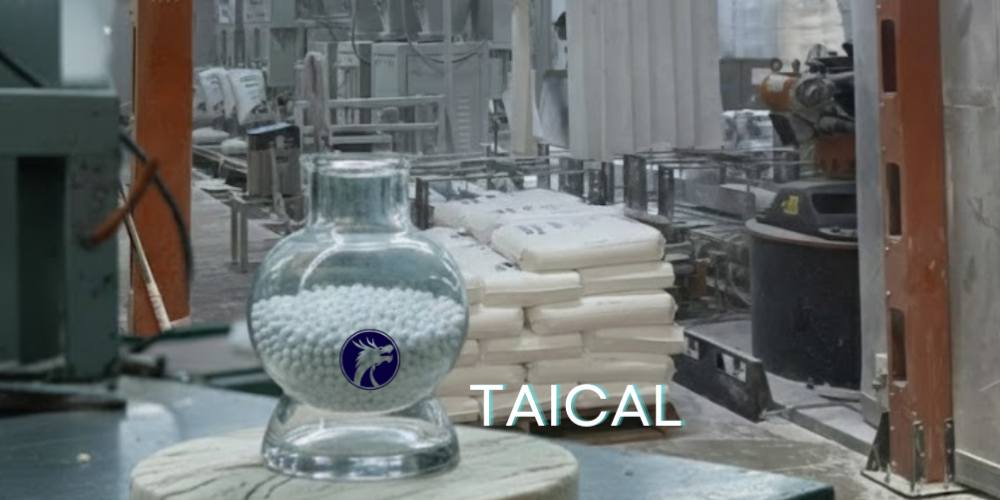
The Role of Taical Resin in the Modern Nonwoven Fabric Manufacturing Industry
Along with the strong development and growth of the textile and garment industry and related supporting industries, nonwoven fabrics are increasingly asserting their position as a key material thanks to their versatility, reasonable production costs, and ability to meet stringent technical requirements. To create nonwoven fabric products with consistent quality, stability, and high economic efficiency, selecting suitable raw materials plays a particularly important role. Among these, Taical resin pellets are considered an optimal raw material solution and are trusted by many businesses.
Taical Plastic Granules – An Effective Solution for the Nonwoven Fabric Industry
Taical resin is a type of compound resin produced from a base resin combined with mineral fillers and specialized additives. The main component of Taical is calcium carbonate (CaCO3) – a mineral capable of improving the physical and mechanical properties of plastic materials. Thanks to this structure, Taical not only helps reduce the amount of virgin resin used but also enhances the production efficiency of nonwoven fabrics.
Currently, Taical granules are widely used in nonwoven fabric production lines serving various fields such as healthcare, agriculture, packaging, hygiene products, and consumer goods. The addition of Taical helps nonwoven fabrics meet criteria for durability, stability, breathability, and safety during use.
The Structure Of Taical Resin In The Production Of Nonwoven Fabrics.
Taical resin pellets are designed with flexible component ratios to suit the specific technical requirements of nonwoven fabric products. The basic structure of Taical pellets includes:
- Basic plastics (PP or PE):As the main components that make up the fiber structure and determine the mechanical properties of nonwoven fabrics, polypropylene and polyethylene are widely used due to their stable processing capabilities and high durability.
- Calcium carbonate powder (CaCO3) It helps increase the stiffness, improve stability, and enhance the load-bearing capacity of non-woven fabrics. At the same time, using CaCO3 also helps businesses significantly reduce raw material costs.
The combination of these components ensures that Taical granules meet technical requirements while optimizing economic efficiency for the manufacturer
.png)
Key Benefits of Using Taical Resin Pellets for Nonwoven Fabrics
Enhance Durability and Improve Product Quality
Taical helps nonwoven fabrics achieve high durability, minimizing tearing, punctures, or deformation during the manufacturing process.
Safe and Environmentally Friendly
Nonwoven fabrics made from Taical are non-irritating, recyclable, and suitable for sustainable production.
Reduce Costs, Increase Competitive Advantage
Replacing a portion of virgin plastic with CaCO3 helps businesses save on production costs while maintaining quality.
The Importance of Choosing Reputable Taical Seeds
To maximize the effectiveness of Taical granules, businesses should choose a manufacturer with many years of experience in the plastics and rubber industry, quality control, and a plentiful supply. A reputable supplier not only ensures consistent granule quality but also provides technical support, helping to optimize the formula and production process of nonwoven fabrics.
Conclude
Taical plastic pellets are playing an increasingly important role in manufacturing with their ability to improve product quality, reduce costs, and meet sustainable needs. Taical is a top choice to help businesses enhance their competitiveness and achieve long-term growth in the market.