
BLOG

- Home
- Blog
- Plastic Polymer Composite Article
- How to choose CaCO3 limestone powder suited to production technology
How to choose CaCO3 limestone powder suited to production technology
October 07,2026
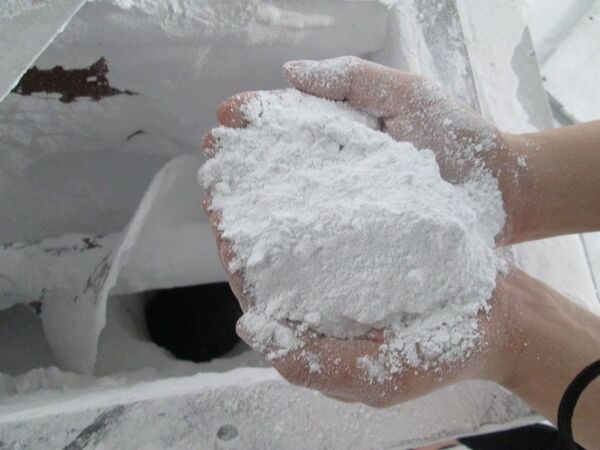
CaCO₃ limestone powder is used across many manufacturing industries, but each production technology has different requirements for purity, particle size, whiteness, and surface coating. Knowing how to choose CaCO3 limestone powder correctly helps businesses optimize blending ratios, improve finished product quality, protect machinery, and control production costs effectively.
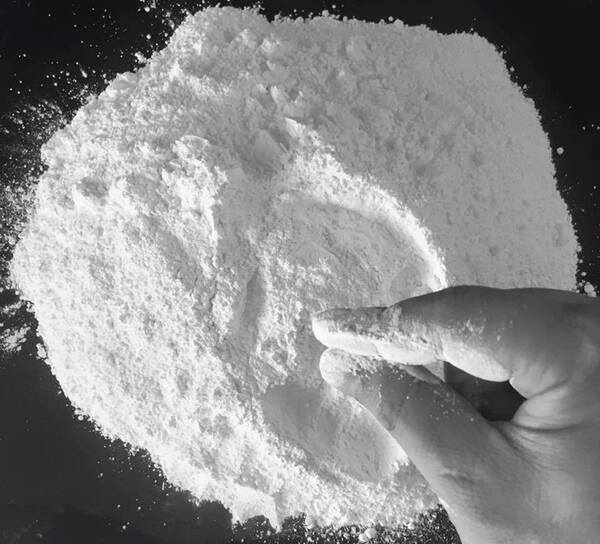
How to choose CaCO3 limestone powder correctly
Why does choosing the right type of CaCO₃ powder matter in production?
Not all CaCO₃ limestone powders on the market share the same quality and properties. Differences in mine geology, purity, and grinding/classifying technology result in product lines with distinct physical and chemical characteristics. Understanding how to choose CaCO3 limestone powder properly brings three core benefits to businesses:
- Optimizing raw material costs: Limestone powder with the right fineness and dispersion ability allows businesses to increase the blending ratio, reducing the amount of resin or expensive pigments such as TiO₂ needed while maintaining product quality.
- Ensuring and improving finished product quality: Choosing the correct particle size and surface characteristics helps the finished product achieve the required gloss, hardness, tear strength, and impact resistance.
- Protecting machinery systems: Low-quality CaCO₃ powder may contain hard impurities such as silica. When passed through extrusion or injection lines, these impurities abrade screws, barrels, and molds, increasing maintenance and repair costs.
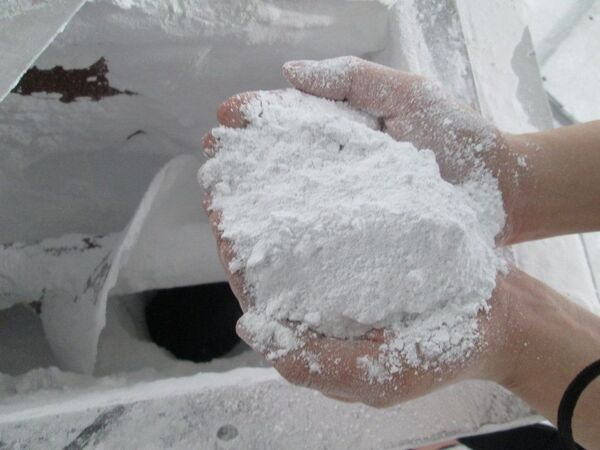
Selecting the right type of powder helps optimize costs and enhance product quality
Core technical criteria for evaluating CaCO₃ powder
Before applying how to choose CaCO3 limestone powder for a specific industry, buyers and production engineers need to understand four technical indicators that directly determine product quality:
- CaCO₃ content (purity): For industries with high requirements, CaCO₃ content should reach 97%-98% or higher. The lower the impurity content - such as Fe₂O₃ and MgO - the more stable the finished color, reducing yellowing or dullness under heat exposure.
- Particle size (fineness - D50 and D97): Particle size is measured in micrometers (µm). Coarse powder, ranging from a few tens to a few hundred µm, is generally suited to construction. Meanwhile, ultra-fine powder from 1-5 µm is an important requirement for thin-film technology or products requiring a smooth surface finish.
- Whiteness and brightness: This index typically reaches 95%-98% and directly affects the product's color-matching ability. Higher-whiteness limestone powder produces brighter finished colors while reducing the amount of masterbatch pigment needed.
- Acid-coated vs. uncoated CaCO₃ powder: Acid-coated powder is covered with a thin layer of stearic acid on the particle surface. This coating acts as a surface treatment agent, improving dispersion in hydrophobic organic polymer matrices and reducing moisture absorption.
Guide to how to choose CaCO3 limestone powder for each specific production technology
Depending on the production technology, businesses need to select CaCO₃ powder with the appropriate fineness, whiteness, purity, and surface characteristics to optimize blending ability, finished product quality, and operational efficiency.
Extrusion and Injection Molding Technology
This technology is commonly used to manufacture products such as PVC door profiles, plastic pipes, household items, and automotive components. A key feature of this technology is that the plastic and filler must undergo melt heating and withstand high shear forces in the screw.
How to choose the powder: Choose an ultra-fine powder line with a particle size of D50 from 1.5-2.5 µm, and it must be coated with stearic acid. The acid coating reduces internal friction and improves even dispersion into PVC, PP, or PE resin, preventing clumping that causes surface pitting or brittleness in the finished product.
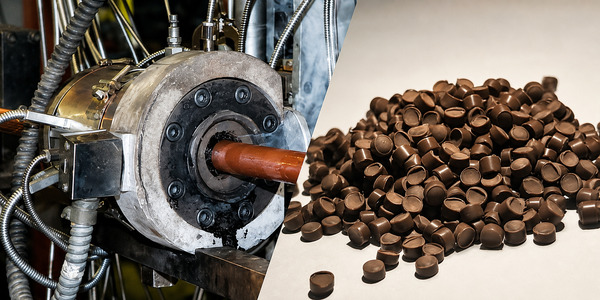
Choosing CaCO3 powder with a D50 of 1.5-2.5 µm and a stearic acid coating
Blown Film Technology (Plastic Bags, PE Film, Agricultural Film)
Blown film is one of the most demanding technologies for fillers. Because plastic film is extremely thin (only a few tens of micrometers), any clumped or oversized limestone particle will tear the film right at the blowing tower.
How to choose the powder: Choose an ultra-fine CaCO₃ powder with extremely high uniformity - D50 smaller than 2 µm and D97 not exceeding 8 µm - combined with high-quality acid coating. Fine particles with absolute dispersion give the plastic film toughness and a smooth surface, free of roughness and fish-eye spots.
Paint and Coating Production Technology
In the paint industry, CaCO₃ powder serves as the main filler to replace part of the expensive Titanium Dioxide (TiO₂) pigment, while also helping control the paint's gloss and viscosity.
How to choose the powder: Unlike the plastics industry, the paint industry only uses uncoated limestone powder so it can disperse easily in water- or solvent-based paint environments. The most important requirement here is whiteness above 97% and low oil absorption. For premium topcoats, choose an ultra-fine particle size of 2-3 µm; for primers or economy wall paints, a particle size of 5-10 µm can be used.

In the paint industry, CaCO3 stone powder acts as a filler that controls the product's gloss and viscosity
Paper and Packaging Production Technology
CaCO₃ powder is used as a filler and coating agent in paper production, helping paper achieve better opacity, higher brightness, and a more even ink-absorbing surface.
How to choose the powder: The current trend is to use Precipitated Calcium Carbonate (PCC) or fine uncoated slurry-form limestone powder. The particle size typically ranges from 1-3 µm. Selecting the correct fineness helps cellulose fibers bond better, increasing the mechanical strength of the paper sheet as it passes through the high-speed press rollers of the papermaking machine.
Rubber and Plastics Production Technology
In rubber vulcanization technology (manufacturing tires, conveyor belts, rubber gaskets), CaCO₃ is added to increase material volume and control elongation and tear strength.
How to choose the powder: The rubber industry generally favors uncoated powder lines with a medium particle size of 3-5 µm. The strictest requirement for this industry is controlling harmful metal impurities - such as iron and copper - at extremely low levels, since these metals accelerate natural aging, causing rubber to crumble and crack prematurely.
Common mistakes when choosing CaCO₃ powder
Through years of consulting and supply experience, VNAPEX has observed that many businesses commonly make the following mistakes:
- Focusing only on price: Cheap, unverified limestone powder often contains high impurity levels and inconsistent particle sizes. This increases the risk of contamination, film tearing, and brittleness, while also generating additional machine repair costs.
- Confusing coated and uncoated powder: Acid-coated powder is unsuitable for water-based paint because it disperses poorly and tends to separate. Conversely, using uncoated powder at a high ratio in plastic extrusion can increase torque, causing resin scorching and a rough surface finish.
- Overlooking the D97 index: Many businesses focus only on the average particle size (D50) while ignoring D97. An excessively high D97 indicates the powder still contains coarse particles, which can clog filter screens, tear film, and affect production process stability.
If you are looking for a high-quality CaCO₃ limestone powder solution to optimize your production costs, VNAPEX is your trusted partner. We specialize in supplying ultra-fine CaCO₃ powder lines (both acid-coated and uncoated) that meet international standards, delivering superior whiteness and highly uniform particle size. Contact VNAPEX now at hotline 0274 362 0911 for in-depth technical consultation and the best market quotation!