
BLOG

- Home
- Blog
- Plastic Polymer Composite Article
- Heavy and Light Calcium Carbonate: What's the Difference?
Heavy and Light Calcium Carbonate: What's the Difference?
October 07,2026
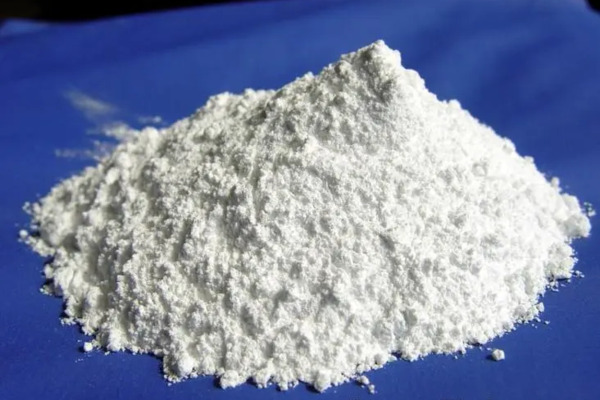
Heavy calcium carbonate and light calcium carbonate are both widely used in plastics, paints, paper, rubber, and construction materials. Although both share CaCO₃ as their main component, the two types differ in production method, particle structure, purity, properties, and application scope.
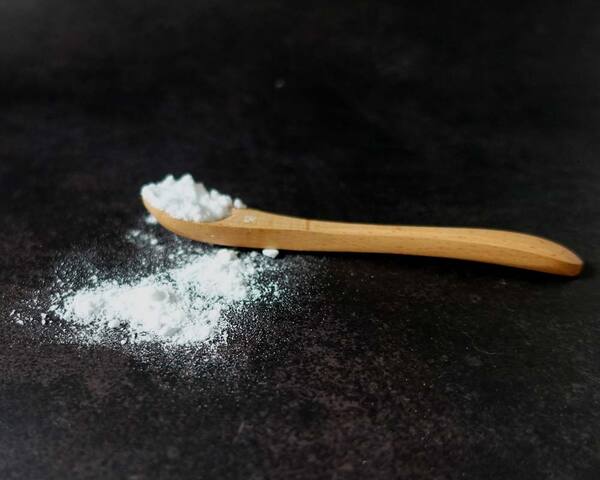
Comparing the Differences Between Heavy and Light Calcium Carbonat
What Is Heavy Calcium Carbonate?
Heavy calcium carbonate (commonly abbreviated as GCC - Ground Calcium Carbonate) is a stone powder product processed directly from natural mineral sources with high CaCO₃ content, such as limestone, marble, seashells, or chalk.
Production method: GCC is produced entirely through coarse mechanical processing. Natural rock blocks mined from quarries go through crushing, then grinding using impact mills, Raymond mills, or ball mills, followed by an air classification system to select ultra-fine particle sizes as required.
Morphological characteristics: Because of the mechanical crushing structure, GCC powder particles typically have an irregular, angular shape, a rough surface, and uneven particle sizes.
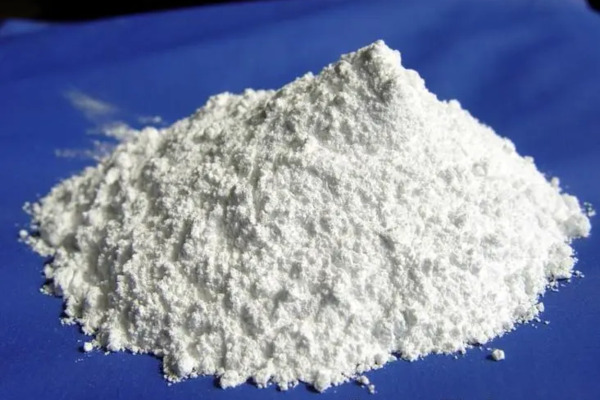
Heavy calcium carbonate is processed directly from natural CaCO₃
What Is Light Calcium Carbonate?
Light calcium carbonate (commonly known as PCC - Precipitated Calcium Carbonate), also called precipitated calcium, is a powder produced through artificial chemical reactions.
Production method: The PCC production process is far more complex than that of GCC. First, high-quality limestone is calcined at temperatures above 900°C to produce quicklime (CaO) and release CO₂ gas. The quicklime is then dissolved in water to form a lime milk solution, Ca(OH)₂. Finally, the recovered CO₂ from the calcination process is bubbled back into this lime milk solution to carry out a precipitation reaction, forming pure, uniformly crystalline CaCO₃ particles, which are then fine-filtered and dried to produce the finished powder.
Morphological characteristics: Because they are formed through chemical precipitation, PCC crystals have a very uniform shape (typically spherical, needle-shaped, or cubic, depending on reaction conditions) with ultra-small particle sizes.
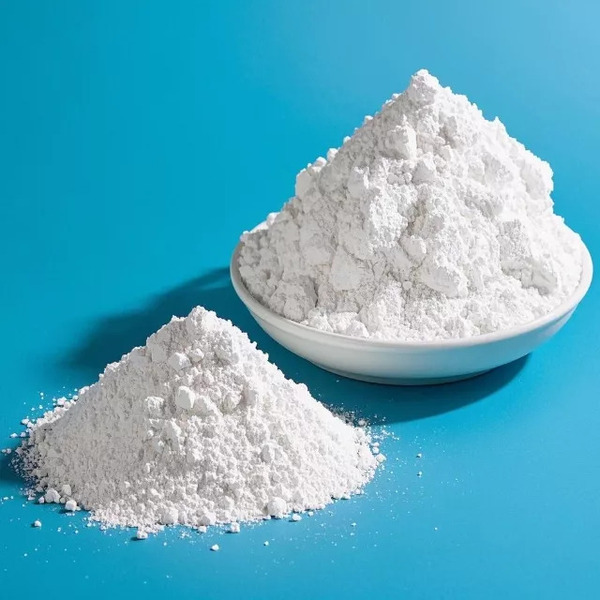
Light calcium carbonate is a powder produced through artificial chemical reactions
Detailed Comparison Table of Heavy and Light Calcium Carbonate
To give you an overview and make it easy to distinguish between them, below is a comparison table of the core technical parameters between heavy and light calcium carbonate:
|
|
|
|
|
|
|
|
|
|
|
|
|
|
|
|
|
|
|
|
|
|
|
|
|
|
|
|
|
|
|
|
|
|
|
|
|
|
|
|
|
|
|
|
|
|
|
|
|
|
|
|
|
|
|
|
|
|
|
|
|
|
|
|
Differences in Practical Applications of Heavy and Light Calcium Carbonate
These deep differences in physical structure and chemical purity push the two types of calcium powder into entirely different industrial application segments.
Applications of Heavy Calcium Carbonate
Thanks to its low cost and abundant supply, GCC plays a core role as a volume-boosting filler that reduces product cost:
- Synthetic plastics industry: Mixed into household PVC plastics, water pipes, electrical cables, and plastic ceiling panels to help shape the structure and reduce the amount of costly virgin plastic needed.
- Standard water-based paint industry: Used as the main filler to build coverage for economy-grade interior and exterior wall paints, helping control the gloss level of the paint film.
- Raw rubber industry: Used in tire manufacturing, rubber mats, and industrial conveyor belts to increase physical hardness.
- Other applications: Used as a component in concrete and cement, in livestock feed (as a calcium supplement), and for improving acidic agricultural soil.
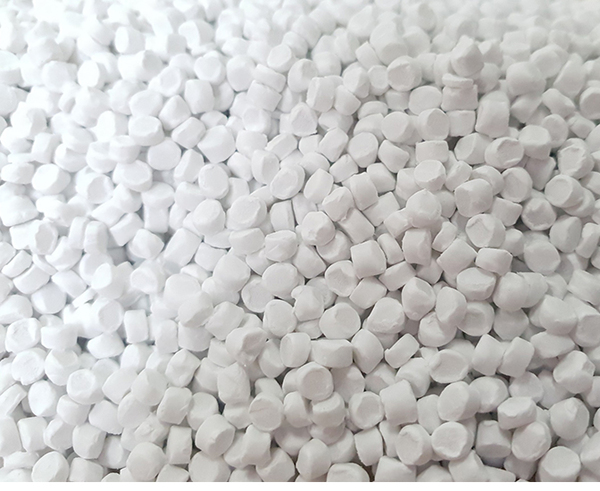
Heavy calcium carbonate is often used as a volume-boosting filler that reduces product cost
Applications of Light Calcium Carbonate
PCC serves not only as a filler but is also regarded as a functional additive that enhances product properties:
- Premium paper industry: PCC is an ideal filler for high-end printing paper and photocopy paper thanks to its ability to increase whiteness and opacity and improve ink adhesion without damaging the paper's fiber structure.
- High-precision technical plastics: Used to manufacture ultra-thin plastic films, load-bearing plastics, and high-quality children's toys, as its uniform particle size gives products a perfectly smooth surface.
- Pharmaceutical and cosmetic industries: Thanks to its absolute purity, PCC meets the standards for use as a mild abrasive in toothpaste, a calcium supplement in infant formula, tablets, and face powder.
- Premium inks and paints: Because its porous particles hold pigment well and disperse evenly, PCC minimizes sedimentation in premium paint cans or ink bottles.
Should You Choose Heavy or Light Calcium Carbonate for Production?
Deciding which type of CaCO₃ powder to buy is not simply a matter of choosing the cheaper or the more expensive option - businesses need to weigh an optimization problem based on two main factors:
- Technical requirements of the finished product: If your product requires an ultra-smooth surface and absolute whiteness, and cannot tolerate nano-structure cracking (such as thin plastic films or premium printing paper), then light calcium carbonate (PCC) is the mandatory choice. Conversely, if you only need to add bulk and create a firm, rigid structure (such as load-bearing plastic pipes, ceramic tiles, or economy wall paint), then heavy calcium carbonate (GCC) is the ideal solution.
- Oil absorption capacity of the formulation: Because light calcium carbonate has high porosity, its oil absorption is much greater than that of heavy calcium carbonate. If your formulation uses a large amount of expensive plasticizers or solvents, using light calcium carbonate may consume more of these solvents, driving up production costs. In that case, heavy calcium carbonate, with its low oil absorption index, will help save on binding additives more effectively.
Both heavy and light calcium carbonate have their own advantages, suited to different production technologies and finished-product requirements. Therefore, businesses need to carefully consider particle size, whiteness, purity, dispersibility, and cost before choosing.
VNAPEX supplies both heavy calcium carbonate and light calcium carbonate in a range of quality grades, meeting diverse needs in the plastics, paint, paper, rubber, and construction materials industries. Businesses can contact VNAPEX via hotline 0274 362 0911 for advice on the product best suited to their specific application.