
BLOG
- Home
- Blog
- Plastic Polymer Composite Article
- How to Test the Fineness, Whiteness, and Moisture of CaCO3 Stone Powder
How to Test the Fineness, Whiteness, and Moisture of CaCO3 Stone Powder
October 07,2026
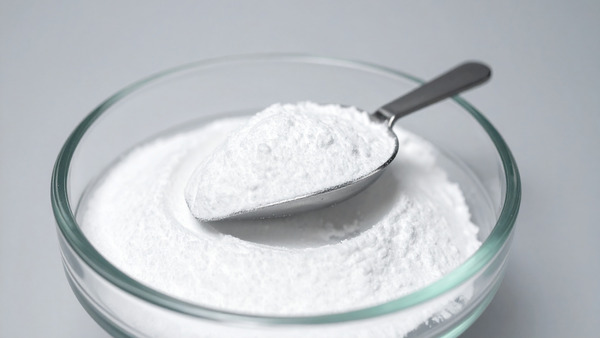
Fineness, whiteness of stone powder, and moisture are important indicators reflecting the quality of CaCO3 stone powder before it is used in production. So which methods are used to test these parameters, and what should be noted to ensure accurate evaluation? The article below will guide you through how to test each indicator, helping businesses choose suitable raw materials and effectively control input quality.
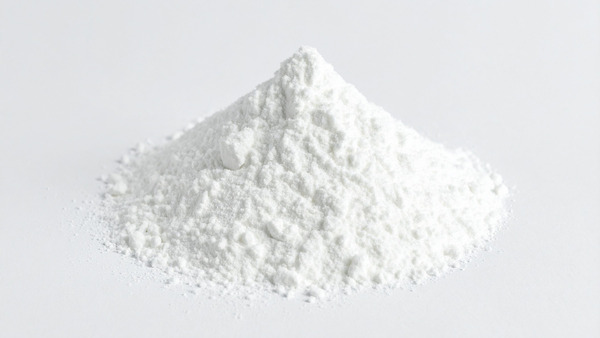
How to Test the Fineness, Whiteness, and Moisture of Stone Powder
Why Is It Necessary to Test the Indicators of CaCO3 Stone Powder?
Each batch of CaCO3 stone powder, whether entering the warehouse or leaving the factory, may show certain differences in physicochemical properties depending on the raw material source and grinding technology. Therefore, businesses need to periodically test indicators such as the whiteness of stone powder, fineness, and moisture to maintain stable raw material quality.
- Ensuring uniformity: Quality control helps limit discrepancies in the mixing formula between production batches, thereby maintaining the stability of the finished product.
- Protecting machinery systems: Stone powder containing coarse impurities or high moisture content can cause wear on screw shafts, clog filtration systems, and affect the operation of the extruder.
- Optimizing production costs: Good control of raw material quality helps businesses accurately assess the value of each batch, while reducing the defect rate and limiting waste during production.
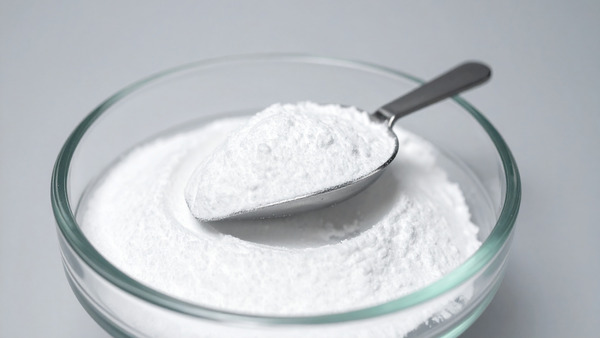
Testing the indicators of CaCO3 stone powder helps maintain stable raw material quality
How to Test the Whiteness of Stone Powder (CaCO3)
The whiteness of stone powder reflects the powder's ability to reflect light and serves as a visual measure of product purity.
Measurement Principle
This method is based on comparing the spectral light-reflecting ability of a flattened, compressed stone powder sample surface with a reference reflective plate made of magnesium oxide (MgO) or barium sulfate (BaSO4), which has a conventional whiteness of 100%.
Equipment Used
- Specialized whiteness meter or spectrophotometer.
- Sample compression mortar operated manually or with standard pressing force.
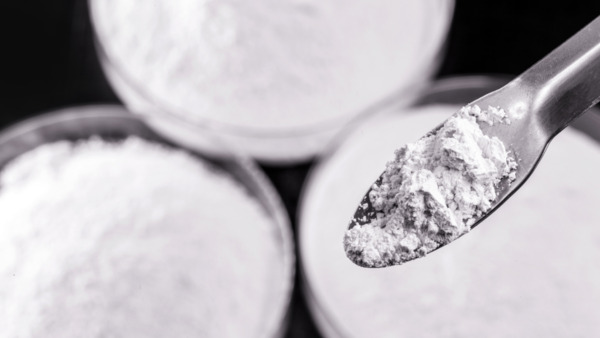
Testing the whiteness of stone powder using specialized measuring equipment
Testing Steps
- Calibrate the device: Turn on the equipment and calibrate it using a black reference plate (0%) and a white reference plate (typically around 95%-98%, depending on the device).
- Prepare the sample: Scoop CaCO3 stone powder to fill the sample measuring cup. Use a tool to flatten the surface. The powder surface must be completely smooth and flat, free of cracks or air pockets, to avoid distorting the path of light.
- Perform the measurement: Place the sample cup into the device's measuring chamber. Press the measure button; the system will automatically scan and display the whiteness result (denoted as W or R457) directly on the electronic screen as a percentage (%).
- Note: The fineness of the stone powder has a minor effect on its whiteness. The finer the powder, the better its light reflectance, and the measured result tends to be 0.5%-1% higher than that of coarser powder.
How to Test the Fineness of CaCO3 Stone Powder
The fineness of stone powder is determined by particle size, usually expressed through two important indices: D₅₀ and D₉₇. D₅₀ is the particle size below which 50% of the sample's particle volume falls, while D₉₇ is the particle size below which 97% of the sample's particle volume falls. The units commonly used are micrometers (μm) or Mesh.
Method 1: Mechanical Vibrating Sieve (for coarse particles > 45 μm / small Mesh sizes)
Equipment: Sieve shaker and standard sieve set, for example, 200 Mesh or 325 Mesh sieves.
Procedure: Accurately weigh a quantity of dry stone powder sample, for example 100 g. Pour the sample into the top sieve, close the lid, and turn on the shaker for about 10-15 minutes. Then weigh the amount of stone powder remaining on the sieve mesh to calculate the percentage of coarse particles that did not pass through.
Method 2: Laser Diffraction Analysis (for ultra-fine powder < 45 μm)
Equipment: Laser diffraction particle size analyzer (for example, the Malvern Mastersizer series). This is a highly accurate method that is widely used today.
Procedure:
- Dissolve a small amount of CaCO3 stone powder into a dispersion medium (usually distilled water combined with a dispersing agent such as sodium polyphosphate), or use a dry dispersion system with compressed air.
- Draw the sample into the device's measuring chamber.
- Laser beams scan through the moving particle stream. Light diffraction occurs, and sensors record the scattering angles so the computer can calculate and output a particle size distribution chart along with detailed D₅₀ and D₉₇ values.
How to Test the Moisture Content of CaCO3 Stone Powder
The moisture content of CaCO3 stone powder is the amount of free water adhering to the surface of the powder particles. For high-quality stone powder used in industry, moisture content is usually controlled at below 0.2%.
Method 1: Traditional Drying (Gravimetric Method)
Equipment: Laboratory drying oven set to 105°C and an analytical balance accurate to 0.0001 g.
Procedure:
- Weigh the mass of a clean drying dish, denoted as m₀.
- Add about 10 g of stone powder to the dish, then weigh the total mass of the dish and sample before drying, denoted as m₁.
- Place the dish in the drying oven at 105-110°C for about 1-2 hours.
- Remove the sample, let it cool in a desiccator, then weigh it again, denoted as m₂. Continue drying and weighing until the mass remains constant.
Formula: Moisture (%) = [(m₁ − m₂)/(m₁ − m₀)] × 100
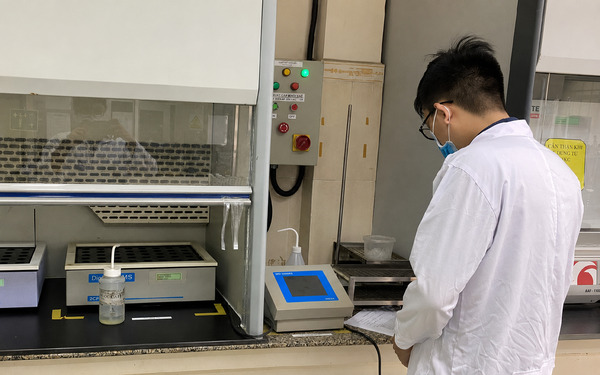
Testing the moisture content of CaCO3 stone powder in the laboratory
Method 2: Infrared or Halogen Moisture Analyzer
Equipment: Automatic moisture analyzer.
Procedure: Spread an adequate amount of stone powder evenly on the device's weighing pan, close the lid, and select the automatic drying mode, typically set at 105°C. The device will heat the sample using a halogen lamp or infrared rays while continuously monitoring the change in the sample's mass. When the mass no longer decreases, the machine automatically stops and displays the moisture percentage on the screen. Measurement time usually takes about 3-5 minutes, depending on the sample quantity and initial moisture level.
How Do These Indicators Affect the Quality of Plastic Products?
In the plastics industry - for example, in the production of filler masterbatch plastic pellets, PVC pipes, PE film, and household plastic items - these three indicators directly affect the quality of the finished product:
- Effect of whiteness of stone powder: If the whiteness of the CaCO3 stone powder is low, or the powder appears dull due to iron oxide (Fe₂O₃) contamination, the resulting plastic product may appear darker or cloudy. To compensate, manufacturers must increase the amount of white colorant such as titanium dioxide (TiO₂), which raises production costs.
- Effect of fineness: Stone powder with small, evenly distributed particle size improves dispersion within the plastic matrix, contributing to better hardness, dimensional stability, and surface smoothness of the product. Conversely, stone powder that is too coarse or has uneven particle sizes can reduce dispersibility, causing a rough surface, defects, and reduced mechanical properties. However, particles that are too fine may also agglomerate if not properly surface-treated or mixed.
- Effect of moisture: High moisture content can cause various defects during plastic processing. When the plastic-stone powder mixture is fed into the extruder at high temperature, the water in the stone powder evaporates and forms air bubbles. As a result, the product may develop surface pitting, bubbling, or film/fiber breakage during production.
Criteria for Selecting the Right CaCO3 Stone Powder for Each Application
Not every application requires stone powder with the highest possible specifications. Selecting raw materials based on the technical requirements of each product helps businesses balance quality and cost:
|
|
|
|
|
|
|
|
|
|
|
|
|
|
|
|
|
|
|
|
|
|
|
|
|
|
|
|
|
|
The above parameters are for reference only. Actual requirements may vary depending on the type of base resin, mixing ratio, processing technology, and standards of each product. Industrial mineral manufacturers also offer various grades of CaCO3 differing in particle size, whiteness of stone powder, moisture content, and surface treatment for different plastic applications.
VNAPEX supplies CaCO3 stone powder with a stable raw material source, clear technical specifications, and quality control for each batch. Contact VNAPEX for consultation on selecting the right stone powder for the plastics, paint, rubber, paper, and other industrial applications.