
NEWS & EVENTS

- Home
- News
- Products Information
- Role of Filler Masterbatch in the Production of Medical Face Masks
Role of Filler Masterbatch in the Production of Medical Face Masks
May 19,2026
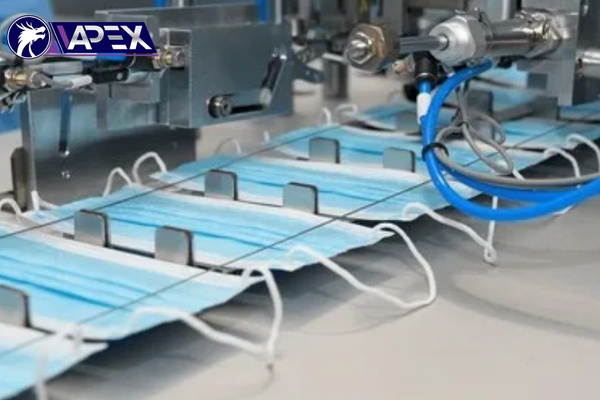
Filler masterbatch in the production of medical face masks is a type of additive plastic compound composed of ultrafine limestone powder (CaCO₃) blended with a Polypropylene (PP) base resin and dispersing agents. This compound reinforces the structural integrity of Spunbond nonwoven fabric while partially replacing costly virgin plastic resin to reduce overall production costs. Explore in-depth analyses of the benefits and technical standards for applying filler masterbatch to medical face mask production lines with APEX Vietnam.
Benefits of Using Filler Masterbatch in the Production of Medical Face Masks
Integrating filler masterbatch (taical) into the nonwoven fabric manufacturing process delivers significant improvements in both physical properties and financial performance. Manufacturers can achieve better quality control over finished products thanks to the stable technical parameters of filler masterbatch in the production of medical face masks.
Effective Optimization of Raw Material Costs
PP resin - the primary polymer used in the production of spunbond and meltblown fabrics for medical face masks - has an unstable price that frequently fluctuates in line with global petroleum markets. By incorporating filler masterbatch into the blending formula, manufacturers can replace a substantial portion of PP resin without compromising the essential performance characteristics of the finished mask.
Specifically, with a CaCO₃ content of 80-88% in the masterbatch, the polymer substitution rate can reach 15-30% depending on the technical requirements of each fabric grade. This results in a significant reduction in raw material costs - particularly meaningful for large-scale manufacturing facilities.
Improved Fiber Durability and Structural Stability
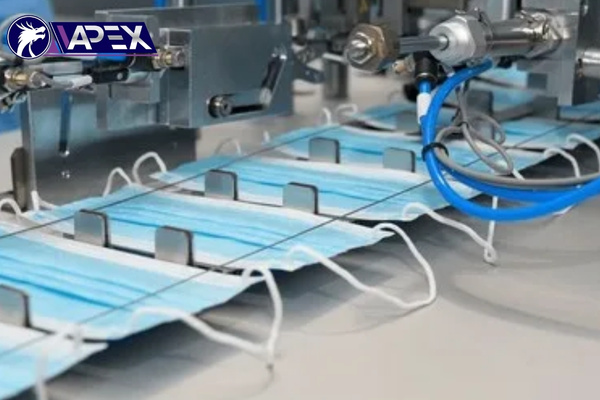
When CaCO₃ is uniformly dispersed throughout the polymer matrix, it acts as a "load-distributing nucleus," supporting the transfer of forces and the distribution of stress within the fiber structure. In this way, filler masterbatch in the production of medical face masks supplies mineral particles that reinforce the polymer network.
Improved Fiber Durability and Structural Stability
The filler particles increase fabric toughness and minimize sagging when users put on or adjust their masks. The CaCO₃-reinforced fabric structure helps masks retain their original shape more effectively, creating a firm and premium feel in the finished product.
Support for Printing and Enhanced Brand Identity
Filler masterbatch directly contributes to increasing the opacity index of the fabric, creating a uniform white base. At the same time, the material improves ink adhesion and reduces ink bleed-through.
As a result, nonwoven fabric surfaces with high opacity and whiteness accept ink more effectively, producing sharper colors with less smearing. This has become an increasingly important factor for mask manufacturers looking to print brand logos, technical specifications, or product identification patterns onto fabric surfaces.
More Precise GSM (Fabric Weight) Control
The GSM index determines the thickness and coverage density of the nonwoven fabric layer - a key factor in the aesthetic quality of the face mask. Adjusting extruder parameters requires raw materials with consistently high density and uniform melt flow.
Filler masterbatch in the production of medical face masks allows technical operators to adjust fabric weight with greater ease, thanks to its higher density compared to virgin resin. This enables the Spunbond fabric layer to achieve optimal coverage, making the mask appear thicker and more visually appealing while maintaining low production costs.
Advancing Sustainable Production and Reducing Environmental Impact
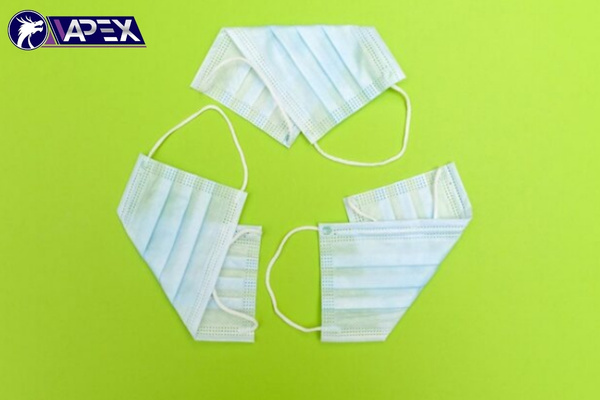
The trend toward using materials of natural origin is becoming a mandatory standard for export orders to Europe and the United States. CaCO₃ limestone powder is an abundant mineral resource that is more environmentally friendly than petroleum-based plastics.
Advancing Sustainable Production and Reducing Environmental Impact
By reducing the polymer content in face masks, manufacturers help limit the volume of non-biodegradable plastic waste released into the ecosystem. Companies that adopt filler masterbatch also find it easier to obtain green certifications, expanding their access to the most demanding international markets.
Criteria for Evaluating a Reputable Filler Masterbatch Supplier
The production of nonwoven fabric for medical face masks demands strict standards of purity and fineness in raw materials to avoid damaging ultrafine fiber extrusion heads. Companies should evaluate filler masterbatch in the production of medical face masks based on the following practical technical criteria:
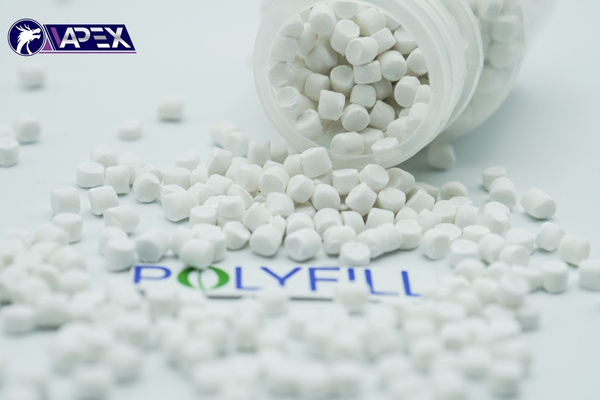
- Consistent Quality: The supplier must guarantee consistent technical specifications across every production batch. Filler masterbatch should achieve a CaCO₃ content of 80-88% and an ultrafine particle size of 1.8-2.3 µm.
- Technical Consultation: The supplier's expert team must have a thorough understanding of Spunbond and Meltblown fabric production realities to properly support manufacturers. They should be able to identify the optimal blending ratio and adjust processing parameters according to each specific GSM requirement.
- Customization Capability: An ideal partner has the capacity to modify the filler masterbatch formulation based on machine configurations and individual order requirements. The manufacturer should be able to proactively adjust the base resin type or incorporate additives to meet specific production needs.
- Practical After-Sales Support: Rapid after-sales service within 24 hours is the hallmark of a reliable strategic partner. A quality supplier will be ready to support trial runs and commit to precise delivery schedules even during peak production seasons.
Criteria for Evaluating a Reputable Filler Masterbatch Supplier
APEX - Filler Masterbatch Supplier for the Face Mask Industry
APEX Vietnam is a distributor and raw material supplier for the plastics and polymer materials industry with nearly 10 years of hands-on experience. In the field of filler masterbatch in the production of medical face masks, we are trusted by many leading manufacturers for the following distinguishing strengths:
- Production Capacity: APEX Vietnam operates a modern automated production line from powder grinding through to pelletizing. The system achieves high output capacity, ensuring absolute consistency across batches and fast delivery lead times.
- Superior Quality: Our products feature optimized technical parameters, including a CaCO₃ content of 80-88% and an extremely low moisture level of less than 0.25%, meeting industry production standards.
- Hands-On Nonwoven Industry Experience: Our team of experts has in-depth knowledge of Spunbond and SMS fiber extrusion machinery used in Vietnam, and is well-versed in the stringent standards of the EU and Japanese markets to provide effective export advisory services.
- Technical Support for Manufacturers: APEX is ready to support trial runs and adjust blending formulas for each customer. Our technical specialists respond promptly to any issues that arise, helping manufacturers stabilize production immediately.
Are you looking for a suitable filler masterbatch supplier for your face mask production line? Let the APEX Vietnam technical team provide you with free, direct consultations and fast-track solutions.
Frequently Asked Questions About Filler Masterbatch
During consultations with medical supply manufacturers, we regularly receive questions about material compatibility and safety. APEX has compiled expert answers to give customers a comprehensive understanding of filler masterbatch in the production of medical face masks before making investment decisions.
Does filler masterbatch affect bacterial filtration efficiency?
The bacterial filtration efficiency (BFE) of a medical face mask is determined by the electrostatic Meltblown membrane layer in the middle. Filler masterbatch is only applied to the two outer Spunbond layers; therefore, it has absolutely no negative effect on the mask's bacterial filtration performance.
Does it cause damage to machinery or extrusion heads?
Extrusion head failures are typically caused by using low-quality filler containing coarse stone particles or hard impurities. APEX Vietnam's products utilize advanced filtration technology and ultrafine stone powder, protecting machinery for smooth operation and extending the service life of critical components.
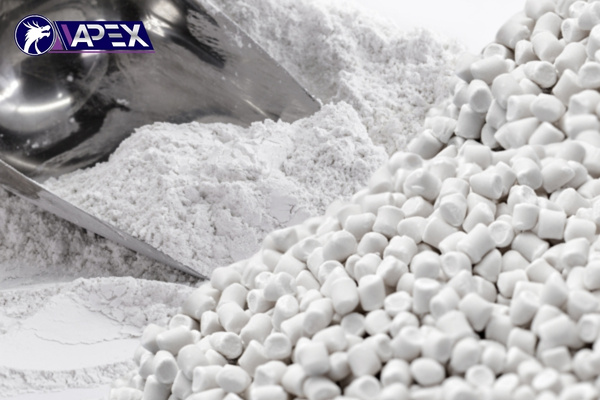
High-quality Filler Masterbatch from APEX Vietnam protects your machinery
Which type of filler should be used for PP spunbond and meltblown?
Most current applications focus on using filler for the PP Spunbond layer to optimize costs most effectively. For the Meltblown layer, which demands extreme thinness and specialized technical performance, we recommend contacting APEX Vietnam directly for consultation on other specialized additive grades.
Applying high-quality filler masterbatch in the production of medical face masks is the key that enables medical supply manufacturers to maximize profitability and establish credibility in the international market. APEX Vietnam supplies specialized filler masterbatch for nonwoven fabrics with superior stone powder fineness, optimizing face mask production costs while ensuring absolute durability and safety. Contact us today for in-depth consultation and competitive pricing!