
NEWS & EVENTS

- Home
- News
- Products Information
- Orange Peel Effect in Paint: Causes and How to Fix It
Orange Peel Effect in Paint: Causes and How to Fix It
May 19,2026
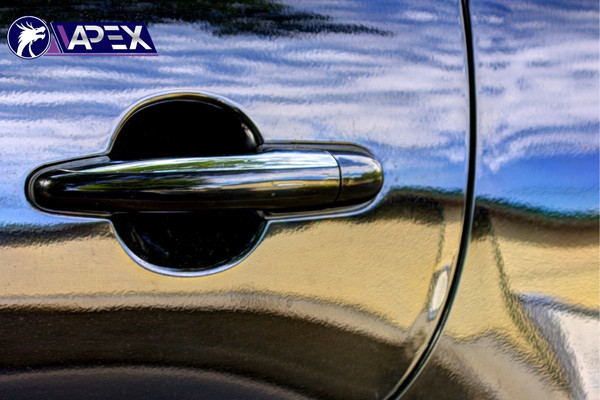
The orange peel effect in paint is a phenomenon that significantly impacts the visual quality of paint film across all industrial and consumer products. Understanding its nature and maintaining proper application technique will help you eliminate this defect and achieve a flawless finish. APEX Vietnam provides a detailed explanation of the causes and guides you through effective solutions to correct this unsightly paint flaw.
What Is the Orange Peel Effect in Paint?
The orange peel effect in paint is a surface defect in which the dried coating becomes rough and uneven instead of smooth and glossy. These tiny ripples mimic the textured structure of an orange peel's skin and prevent uniform light reflection across the paint film.
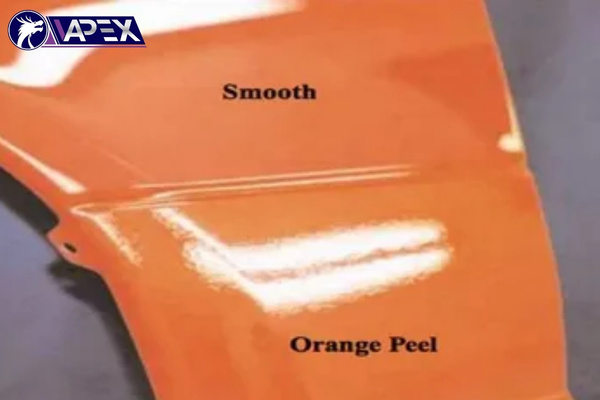
The orange peel effect in paint makes the coating rough and unsightly
This defect most commonly occurs in automotive, wood, and metal coating applications when paint droplets cannot fully level out before the film cures. The appearance of these wrinkled patterns significantly reduces both the gloss and the aesthetic value of the finished product.
Causes of the Orange Peel Effect in Paint
Technical specialists at APEX Vietnam have identified several factors that contribute to the orange peel effect in paint. Understanding these causes is essential for establishing a proper application process and minimizing avoidable technical errors.
Incorrectly Adjusted Paint Viscosity
Using too little thinner results in a paint mixture that is excessively thick, leading to improper viscosity. Overly thick paint prevents the droplets from merging after they leave the spray gun tip. When the paint contacts the surface, the droplets retain their rounded shape rather than flowing into one another, creating the characteristic bumpy texture resembling orange peel skin.
Improper Spray Application Technique
Even when paint viscosity is ideal, incorrect spraying technique can still produce the orange peel effect in paint. Common technical errors include:
- Spraying from too great a distance: The droplets lose too much solvent before reaching the surface, causing localized viscosity to increase.
- Moving the spray gun too quickly: The resulting thin, uneven coat lacks sufficient material to self-level properly.
- Inconsistent spray pressure: This produces paint particles of non-uniform size.
- Off-angle spraying: Uneven paint distribution creates alternating thick and thin zones on the surface.
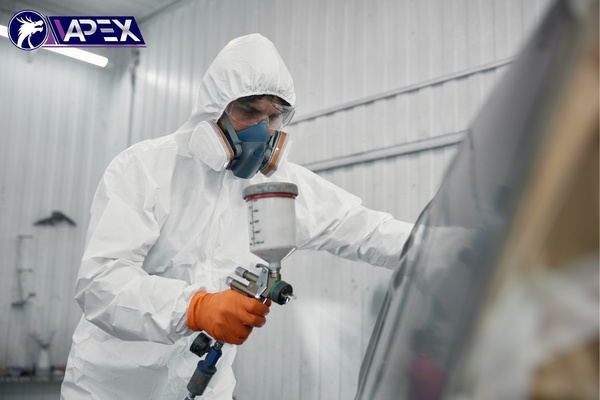
Causes of the Orange Peel Effect in Paint
Environmental Conditions During Application
Environmental factors such as temperature, humidity, and wind speed have a considerable effect on solvent evaporation rates and paint curing speed.
| Environmental Factor | Effect on Paint |
|---|---|
| High temperature (>35°C / 95°F) | Solvent evaporates too quickly → paint dries before it can level |
| Low humidity (<40% RH) | Similar to high temperature, it accelerates surface drying |
| Strong wind | Causes uneven surface drying and localized viscosity differences |
| Low temperature (<10°C / 50°F) | Paint thickens, reducing its ability to flow and level |
Unsuitable Spray Equipment
The spray gun and pressure system play a critical role in producing uniformly sized paint particles. Common equipment-related issues that cause the orange peel effect in paint include:
- Needle and nozzle tip sizes mismatched to the viscosity of the paint being used
- Unstable pump pressure or clogged air filters.
- Worn or dirty spray guns produce an uneven spray pattern.
- Using a low-pressure spray gun with high-viscosity paint results in large. droplets that are difficult to level.
How Does the Orange Peel Effect Impact the Finished Surface?
The orange peel in paint causes significant negative consequences for both the economic value and the durability of protective coatings. Accurately assessing these impacts allows for timely corrective action and helps maintain the reputation of the applying contractor.
- The rough paint film eliminates the natural gloss and reflective elegance of the product's surface.
- The orange peel texture makes cleaning difficult, as dust and contaminants easily accumulate in the tiny recesses.
- Small grooves on the surface trap moisture and create pathways for corrosive agents to penetrate deeper into the substrate.
- Companies incur additional labor costs to carry out sanding and re-polishing steps.
- Products with surface defects are frequently rejected during client acceptance inspections or result in contract value reductions.
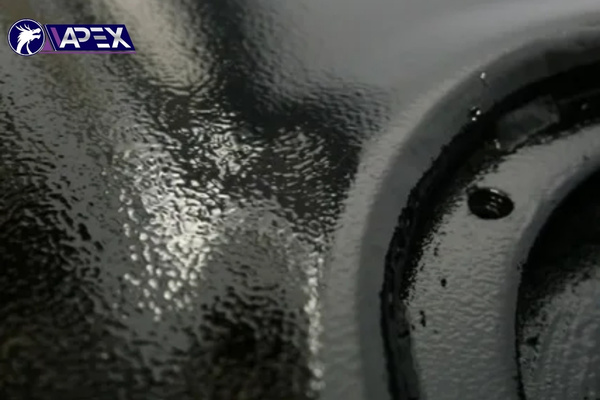
The effects of orange peel on paint’s surface finishes
Solutions for Fixing the Orange Peel Effect in Paint
Applying the correct technical solutions for the orange peel effect in paint repair restores a smooth, even surface and improves overall productivity for the application team. APEX Vietnam recommends the following specific adjustment methods based on precise measurement standards and extensive hands-on experience.
Readjust Paint Viscosity
Every paint system has an optimal viscosity range recommended by the manufacturer to ensure both workability and high-quality film formation. The table below provides standard technical parameters for reference across common paint systems.
| Paint System | Recommended Viscosity Range (Reference) | Common Measurement Method |
|---|---|---|
| Interior water-based paint | 80–120 KU | Krebs Unit (KU) measurement |
| Exterior water-based paint | 100–150 KU | Krebs Unit (KU) measurement |
| Oil-based (solvent-borne) paint | 120–180 KU | Krebs Unit (KU) measurement |
| Epoxy paint | 500–2,000+ cP | Brookfield viscometer (cP) |
Improve Spray Application Technique
The spray gun operator's skill is the key factor in achieving a uniform coating that prevents the orange peel effect in paint. Maintain a consistent spray gun distance of 15 to 20 centimeters (approximately 6-8 inches) from the substrate surface throughout the entire application process.
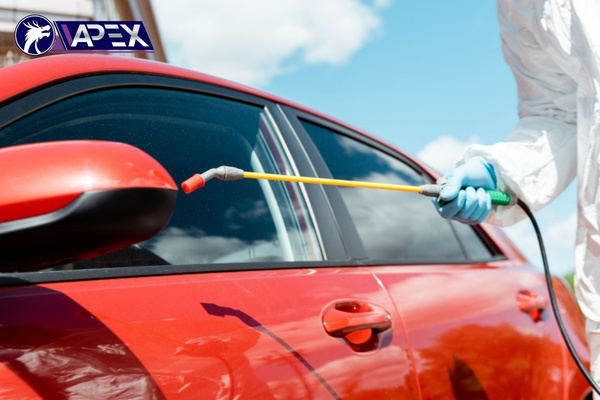
Improve paint spraying techniques to address the orange peel effect
The applicator should move the gun at a steady, moderate speed and ensure each successive pass overlaps the previous one by approximately 50%. Always keep the spray gun perpendicular to the surface so that paint particles adhere evenly without being deflected sideways. Meticulous attention to each technique will eliminate rough or sagging paint zones.
Control the Application Environment Effectively
An ideal application environment supports gradual, stable solvent release. Set up adequate enclosures to prevent drafts and airborne dust from entering the paint area.
- Ideal application temperature: Most industrial and automotive paint systems perform best between 15-30°C (59-86°F). Avoid applying paint in intense midday sunlight where surface temperatures can exceed 50°C (122°F) even when the air temperature is only 35°C (95°F).
- Relative humidity: Maintain between 40-70% RH. Humidity that is too low causes paint to dry too quickly; humidity that is too high can cause blistering or delamination with certain paint types.
- Wind protection and control: Work in a covered area and avoid wind blowing directly onto the surface being painted. In a workshop setting, using a spray booth equipped with temperature, humidity, and air filtration controls is the most professional and optimal solution.
- Use slow-evaporating solvents: In hot weather conditions, adding a retarder to the paint mixture extends the open time, giving the paint additional time to level before curing begins.
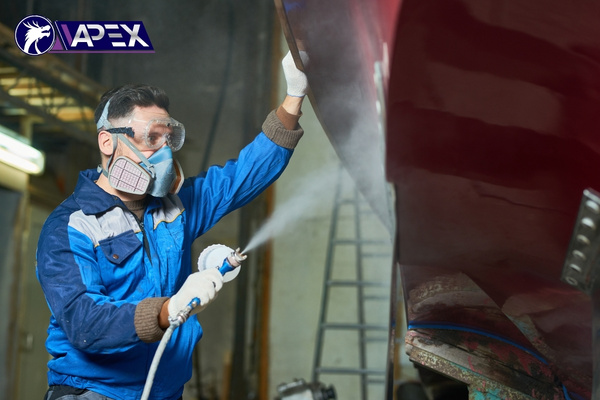
Effectively control the construction environment to avoid unsightly defects
Select Appropriate Spray Equipment
Modern spray equipment offers flexible parameter adjustment to suit the specific characteristics of each coating material. Always verify that the nozzle tip size is compatible with the viscosity of the paint being used.
Inlet air pressure must meet the manufacturer's specified standard to ensure effective atomization of the paint. Using advanced spray gun technology, such as HVLP (High Volume Low Pressure), minimizes overspray and produces a smoother finish. Additionally, performing regular maintenance on spray guns is an effective preventive measure against clogged or uneven spray patterns.
Furthermore, a properly prepared plastic substrate serves as an important foundation that promotes uniform paint adhesion and minimizes the risk of the orange peel effect in paint. APEX Vietnam supplies a premium plastic pellet system to support manufacturers in producing products with superior surface smoothness and aesthetics. Contact us today to access high-quality plastic material solutions and elevate the value of your products.