
NEWS & EVENTS

- Home
- News
- Products Information
- HIPS and PP Plastic: Properties and Practical Applications
HIPS and PP Plastic: Properties and Practical Applications
May 19,2026
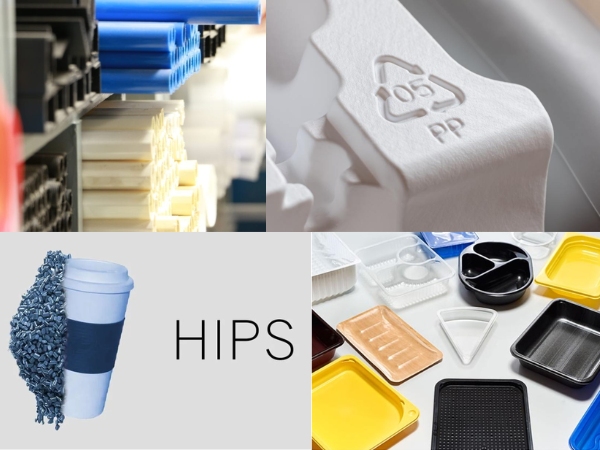
HIPS and PP plastic are two common thermoplastics with distinct characteristics: HIPS is rigid, easy to shape, and highly aesthetic; PP offers excellent mechanical strength, good heat resistance, and strong chemical resistance. HIPS is suitable for short-term or visually focused applications, while PP is superior for applications requiring durability and safety. Let’s explore these two plastics in more detail with APEX in the article below!
What is HIPS?
HIPS (High Impact Polystyrene) is a modified form of polystyrene designed to improve impact resistance. Thanks to its balance of mechanical properties, aesthetics, and processability, HIPS is widely used in consumer products.
Physical and mechanical properties:
- Tensile strength: Ranges from approximately 2,000 – 3,000 psi.
- Processability: Very good, easily formed using vacuum forming or injection molding methods.
- Surface finish: Hard, glossy surface with good ink adhesion and strong bonding with adhesives.
- Temperature resistance: Heat distortion temperature is around 80 – 90°C, with a melting temperature of approximately 100°C.
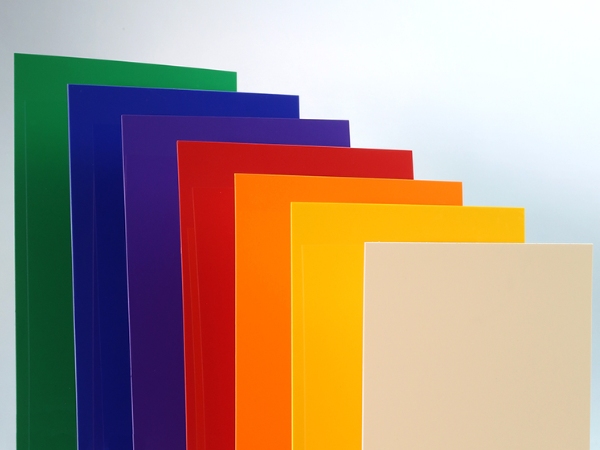
HIPS is very easy to shape using vacuum forming or injection molding
Typical industrial applications:
- Electronics: Protective casings for televisions, computers, and handheld devices.
- Advertising: Point of Sale (POS) displays, signage, and promotional models.
- Household: Inner linings of refrigerators, disposable food trays.
What is PP?
PP (Polypropylene) is a semi-crystalline thermoplastic produced from propylene monomers. This material stands out for its chemical resistance, fatigue resistance, and high mechanical strength, making it suitable for applications that require long-term durability.
Physical and mechanical properties:
- Mechanical strength: High tensile strength, ranging from 4,000 – 5,000 psi.
- Chemical resistance: Resistant to most organic solvents and cleaning chemicals.
- Weight: Low density (~0.90 g/cm³), helping optimize the weight of the final product.
- Temperature resistance: High melting point, typically ranging from 130 – 170°C.
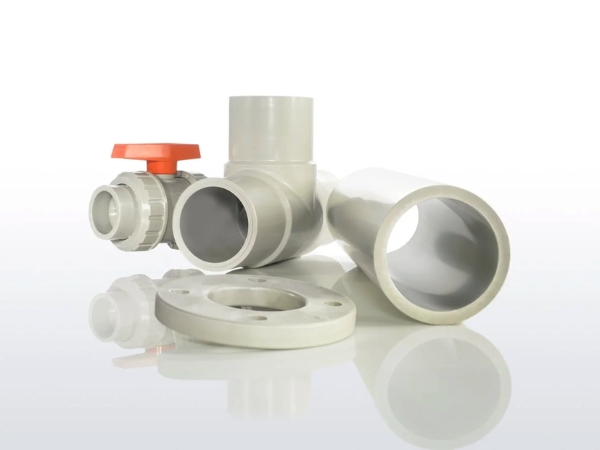
PP is a semi-crystalline thermoplastic produced from propylene monomers
Typical industrial applications:
- Automotive industry: Bumpers, ventilation systems, and battery casings.
- Medical industry: Syringes, test tubes, and laboratory equipment.
- Infrastructure: Water pipes, pipe fittings, and pressure-resistant caps.
Comparison Between HIPS and PP Plastic
To choose the right material, comparing HIPS and PP plastic should be based on key technical criteria such as mechanical strength, heat resistance, chemical resistance, and cost efficiency. Each plastic has its own advantages, making it suitable for different applications.
| Criteria | HIPS | PP |
| Mechanical Properties | Good impact resistance, less prone to cracking | Excellent fatigue resistance, suitable for repetitive components |
| Heat Resistance | ~100°C, easily deforms under high heat | ~130°C, more stable |
| Chemical Resistance | Moderate, weak against strong chemicals | Excellent, resistant to acids and alkalis |
| Moisture Resistance | Slight moisture absorption over time | Almost non-absorbent |
| Surface Aesthetics | Smooth surface, easy to print, attractive finish | More difficult to print, requires surface treatment |
| Processing | Easy to cut and thermoform | Suitable for large-scale injection molding and blow molding |
| Recyclability | Recycling code 6, less commonly recycled | Recycling code 5, widely recycled |
| Cost | Lower cost, suitable for short-term products | More cost-effective long-term due to high durability |
Should You Choose HIPS or PP?
HIPS is suitable for products that require good aesthetics, easy processing, and low cost, especially packaging or short-term consumer products. PP stands out in applications requiring long-term durability, heat resistance, and chemical resistance, making it widely used in industrial, medical, and food-related applications.
Choose HIPS (High-Impact Polystyrene) when:
- The product surface needs sharp logo or branding printing, or requires a smooth decorative coating.
- Low-cost trays, disposable cups, or point-of-sale marketing materials (POSM) are needed.
- Suitable for vacuum forming or manual cutting processes in model making and signage production.
Choose PP (Polypropylene) when:
- Products are frequently exposed to cleaning chemicals, acids, or require sterilization at high temperatures (up to 130°C).
- Flexible hinge components, automotive parts, or products subjected to repeated bending stress are required.
- Products are used in hospitals, such as test tubes, syringes, or microwave-safe food containers.
Besides technical factors, the plastics industry is increasingly shifting toward materials with high recyclability. PP has a stronger advantage in sustainable supply chains thanks to its globally recognized recycling code #5, helping businesses more easily achieve environmental certifications. Meanwhile, HIPS often requires more specialized recycling and processing systems in certain regions.
APEX Provides High-Quality PP Resin to Optimize Production Efficiency
PP Filler Masterbatch is a strategic solution that helps businesses optimize raw material costs. By using Calcium Carbonate combined with a PP base resin, the product allows manufacturers to partially replace virgin plastic while still maintaining the required structural performance. This makes it an ideal choice for large-scale factories seeking a balance between production cost, operational efficiency, and output quality.
PP Filler Masterbatch significantly improves the technical properties of products, including:
- Increased rigidity and dimensional stability.
- Reduced shrinkage during the cooling process.
- Better thermal conductivity, helping shorten production cycles.
- Enhanced heat resistance during processing.
APEX has built its reputation on a strict input quality control system and a closed production process. Resin batches are consistently uniform, helping machinery operate more stably while reducing equipment wear. APEX’s technical team is always ready to advise on suitable mixing ratios and support customers in solving processing-related issues. This proactive and specialized approach has made APEX a trusted partner for many plastic manufacturing businesses in Vietnam.
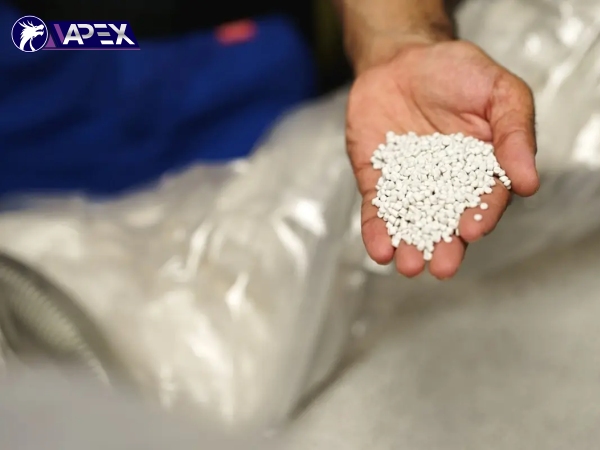
APEX provides high-quality PP resin to optimize production efficiency
In summary, HIPS and PP plastic are both important materials in the modern plastics industry, but each is suited to different production goals. If your business is looking for an optimized PP Filler Masterbatch solution, APEX is ready to support you from consultation to practical implementation, helping maximize production efficiency and cost optimization.