
NEWS & EVENTS

- Home
- News
- Products Information
- ABS vs PP Plastic Comparison: Mechanical Properties and Applications
ABS vs PP Plastic Comparison: Mechanical Properties and Applications
May 19,2026
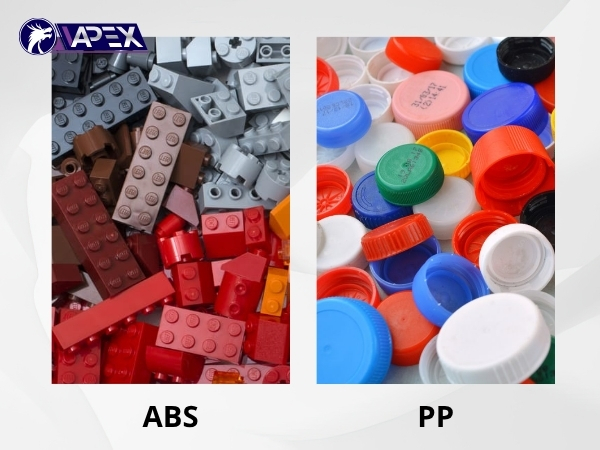
An ABS vs PP plastic comparison is an important step in material selection for manufacturing, as every decision directly impacts product durability, cost, and overall performance. Although both are widely used plastics, ABS and PP differ significantly in their mechanical properties and application ranges. Choosing the wrong material may lead to issues related to product quality and performance.
What Is ABS Plastic? Characteristics and Applications
ABS plastic (Acrylonitrile Butadiene Styrene) is an engineering thermoplastic known for its rigidity, high mechanical strength, and excellent impact resistance. This material is composed of three main components: acrylonitrile, butadiene, and styrene.
Characteristics of ABS plastic:
- High impact resistance: Offers strong resistance to external forces, helping reduce cracking or breakage under mechanical impact.
- Good surface hardness: Features a solid surface with good scratch resistance during use.
- Moderate heat resistance: Remains stable at temperatures below approximately 90–100°C, depending on the material grade.
- Good electrical insulation: Non-conductive, low water absorption, and stable in dry environments.
- Easy processing: Suitable for injection molding and casting processes, while also allowing easy surface finishing such as painting or plating.
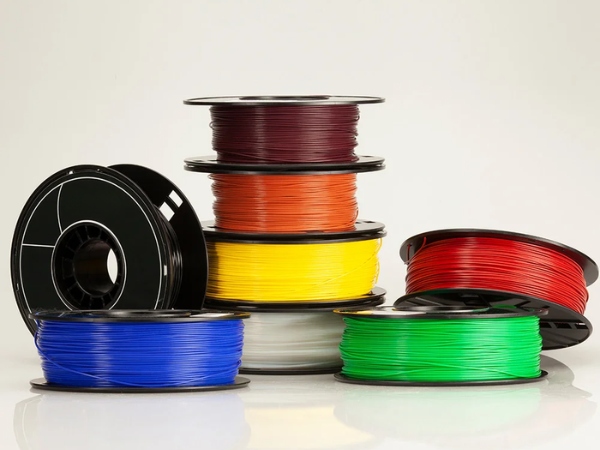
ABS plastic is an engineering thermoplastic
Thanks to its stable mechanical properties and ease of processing, ABS is widely used across many industries:
- Household appliances: Blender housings, rice cookers, electric kettles, and vacuum cleaners.
- Automotive and motorcycle industry: Headlight covers, dashboards, interior trims, and technical components.
- Electrical and electronic equipment: Printer casings, keyboards, computer mice, and office equipment.
- Consumer goods and toys: Children’s toys (such as LEGO products), suitcases, helmets, and engineered plastic products.
- Industrial applications: Technical boxes, equipment housings, and lightweight mechanical components.
What Is PP Plastic? Characteristics and Applications
PP plastic (Polypropylene) is a thermoplastic polymer produced through the polymerization of propylene monomers. It is one of the most widely used plastics today thanks to its high stability, excellent chemical resistance, and broad range of applications in both industrial and everyday products.
Characteristics of PP Plastic:
- Good heat resistance: PP has a melting point of around 160–170°C, making it suitable for high-temperature environments such as microwave ovens and dishwashers.
- Stable mechanical strength: The material offers moderate rigidity, good load-bearing capacity, and resistance to cracking under normal usage conditions.
- Excellent chemical resistance: Resistant to many acids, alkalis, and common solvents.
- Lightweight: Lighter than many engineering plastics, making production and transportation more convenient.
- High safety level: Commonly used in products that come into direct contact with food and children’s items.
- Good moisture resistance: The surface absorbs very little moisture and helps prevent the penetration of water, steam, and grease.
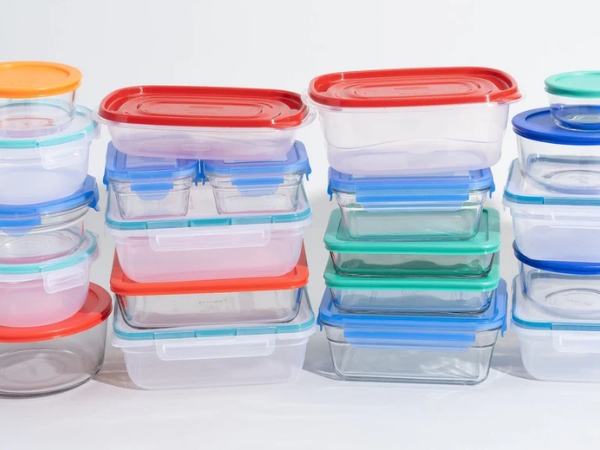
PP plastic has relatively good rigidity and strong load-bearing capacity
Thanks to its stability and safety, PP plastic is widely used across many industries:
- Household and food applications: Food containers, lunch boxes, water bottles, baby bottles, plastic baskets, and kitchen utensils.
- Packaging industry: Food wrapping films, industrial packaging, and bottles or containers for food, pharmaceuticals, and cosmetics.
- Technical and industrial applications: Plastic components, equipment housings, chemical piping, and lightweight mechanical parts.
- Toys and stationery: Children’s toys, school supplies, and office items
Detailed ABS vs PP Plastic Comparison
The table below provides a detailed ABS vs PP plastic comparison based on key technical criteria, helping businesses select the most suitable material for specific applications.
| Criteria | ABS Plastic | PP Plastic |
| Mechanical properties | Rigid, high impact resistance, dimensionally stable, but may crack under extremely strong impact | More flexible, good bending resistance, less likely to crack under light impact but less rigid than ABS |
| Hardness | High, solid surface with good scratch resistance | Lower than ABS, more prone to deformation under load |
| Heat resistance | ~80–100°C | ~120–130°C |
| Processing | Easy injection molding and shaping, suitable for technical parts and 3D printing | Moldable but harder to bond; requires suitable processing conditions |
| Chemical resistance | Fair resistance to oils and grease, weaker against strong solvents | Excellent resistance to acids, bases, and many solvents |
| UV resistance | Moderate, may degrade with long-term outdoor exposure | Lower than ABS unless UV stabilizers are added |
| Electrical insulation | Good | Good |
| Weight | Heavier (~1.04 g/cm³) | Lighter (~0.90 g/cm³) |
| Recyclability | Recyclable but quality may degrade | Easier and more efficient to recycle |
| Safety | Safe under normal usage conditions | Safer for food contact and household applications |
| Cost | Higher cost | Lower cost, more economical |
Should You Choose ABS or PP Plastic?
If high mechanical strength, stable rigidity, and good shape retention are the top priorities, ABS plastic is the more suitable choice. It is commonly used in products that require high aesthetics and precision, such as electronic components, interior accessories, equipment housings, and technical parts with strict dimensional requirements.
On the other hand, PP plastic is a better option for applications that demand lightweight properties, strong chemical resistance, and cost efficiency. With its stability in food-contact environments and relatively good heat resistance, PP is widely used in household products, packaging, and general consumer goods.
APEX Vietnam – High-Quality Filler Masterbatch Manufacturer
APEX Vietnam is a manufacturer of high-quality filler masterbatch designed to optimize plastic raw material costs and improve efficiency in industrial production processes.
Product Characteristics:
- Reduces virgin plastic consumption: Helps lower the proportion of virgin resin used in production, optimizing material costs.
- Improves mechanical properties: Enhances compressive strength, abrasion resistance, and dimensional stability of finished products.
- Minimizes shrinkage and deformation: Reduces shrinkage during cooling, ensuring better product stability.
- High cost efficiency: Significantly reduces production costs while maintaining stable output quality.
- Optimized for industrial manufacturing: Suitable for large-scale production lines requiring consistency and high performance.
APEX Vietnam’s filler masterbatch helps businesses optimize production costs, stabilize product quality, and meet the demands of industrial-scale manufacturing. For more detailed consultation, feel free to contact APEX today to find the most suitable material solution for your production line.
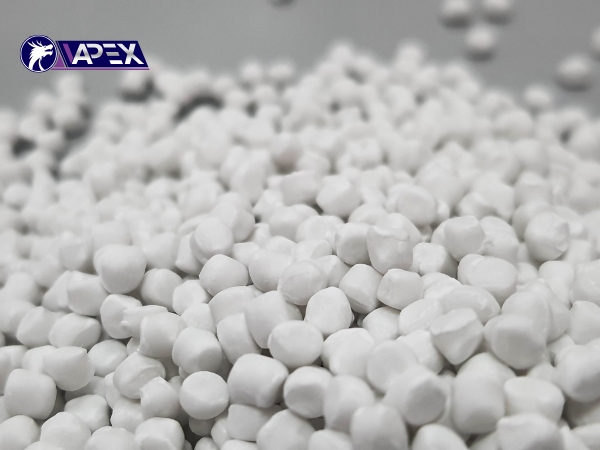
APEX Vietnam – High-Quality Filler Masterbatch Manufacturer
The ABS vs PP plastic comparison shows that each material has its own distinct characteristics, making them suitable for different application groups. ABS stands out for its rigidity, impact resistance, and high aesthetic quality, while PP offers advantages in lightweight properties, strong chemical resistance, and cost efficiency in production. Businesses should carefully consider technical requirements, usage environment, and production costs when selecting between these materials to ensure optimal operational efficiency and consistent product quality.